Oven Repair vs. Replace Calculator
Enter Your Details
Recommendation
Enter details and click Analyze to see if you should repair or replace your oven.
You’re standing in your kitchen, staring at that electric oven. It’s been with you through every holiday dinner and midnight snack run for fifteen years. But lately, it’s acting up-maybe the temperature is off by twenty degrees, or the door seal is cracked, letting heat escape into the room. The first thought is always: "Can I fix this cheaply?" The second thought is: "Is it worth throwing money at an old machine?"
Here is the hard truth most contractors won’t say upfront: repairing a 15-year-old electric oven is usually a gamble. It depends entirely on what broke, how much the part costs, and whether you can find a technician who still stocks parts for legacy models. In Hamilton, where older housing stock often comes with appliances from the early 2010s, this is a common dilemma. Let’s break down exactly when to call a pro and when to start browsing new models.
The 50% Rule and Replacement Cost Math
Appliance technicians often use a simple heuristic called the 50% rule. If the cost of the repair exceeds 50% of the price of a new comparable unit, replace it. For a standard freestanding electric range, which might cost $800 to $1,200 CAD new, that means if the repair quote hits $400-$600, you should likely buy a new one.
Why? Because a 15-year-old oven has other components nearing end-of-life. Fix the heating element today, and the control board might fail next month. Each service call carries a diagnostic fee, typically between $75 and $120. If you pay that three times in two years, you’ve spent more than the value of the appliance.
| Component Failure | Avg. Part Cost (CAD) | Labor Time | Verdict |
|---|---|---|---|
| Door Seal/Gasket | $30 - $60 | Low | Repair (Easy DIY) |
| Heating Element (Bake/Broil) | $40 - $90 | Low | Repair (High Value) |
| Oven Fan Motor | $80 - $150 | Medium | Borderline |
| Control Board/Electronics | $150 - $300+ | High | Replace |
| Clock/Timer Module | $100 - $200 | Medium | Replace |
When Repair Makes Sense (The Low-Cost Wins)
Not all failures are created equal. Some issues are trivial to fix and extend the life of the oven significantly without breaking the bank. If your problem falls into these categories, keep the old oven running.
- Worn Door Seals: Over time, the rubber gasket around the oven door hardens and cracks. This causes uneven cooking and higher energy bills. Replacing it is a straightforward DIY job. You just need the exact model number to order the right part. It takes ten minutes and costs under $50.
- Burnt-Out Heating Elements: If your bake function works but broil doesn’t (or vice versa), it’s often just the element. These are simple screw-in or bolt-on parts. They are inexpensive and easy to swap out. As long as the wiring isn’t corroded, this is a no-brainer repair.
- Loose Wiring or Thermostat Calibration: Sometimes the oven isn’t broken; it’s just drifted out of calibration. A technician can adjust the thermostat offset for a small fee, or you can do it yourself via the control panel on many digital models. This solves temperature inconsistency without replacing hardware.
When to Walk Away (The High-Risk Repairs)
Some repairs are financially irrational for a 15-year-old unit. Here is why you should hesitate before signing a repair invoice.
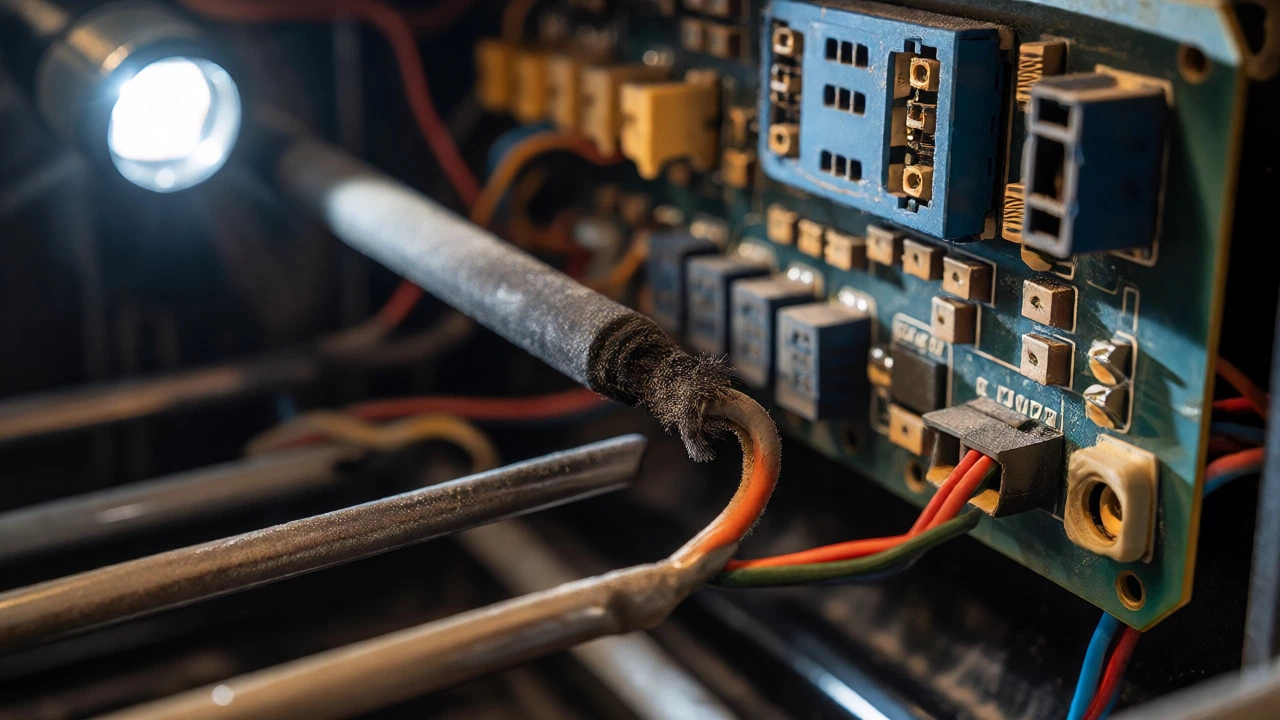
Electronic Control Boards: Modern ovens rely heavily on printed circuit boards. When these fail, they aren’t repairable-they must be replaced. New boards for discontinued models can cost upwards of $250 plus labor. Plus, finding a supplier who still stocks them can take weeks. If your oven displays weird error codes or the display is flickering, ask for a firm quote before authorizing work.
Compressor Issues (if combined with fridge): While rare for standalone ovens, if you have a wall oven combo with cooling features, compressor failure is a death sentence. Compressors are expensive and labor-intensive to replace.
Rust and Structural Damage: Look inside the cavity. Is the enamel chipping? Is there rust on the floor? If water leaked onto the electronics or insulation, the damage is often widespread. Patching up a rusty shell doesn’t make sense when the internal structure is compromised.
The Hidden Cost: Energy Efficiency Gains
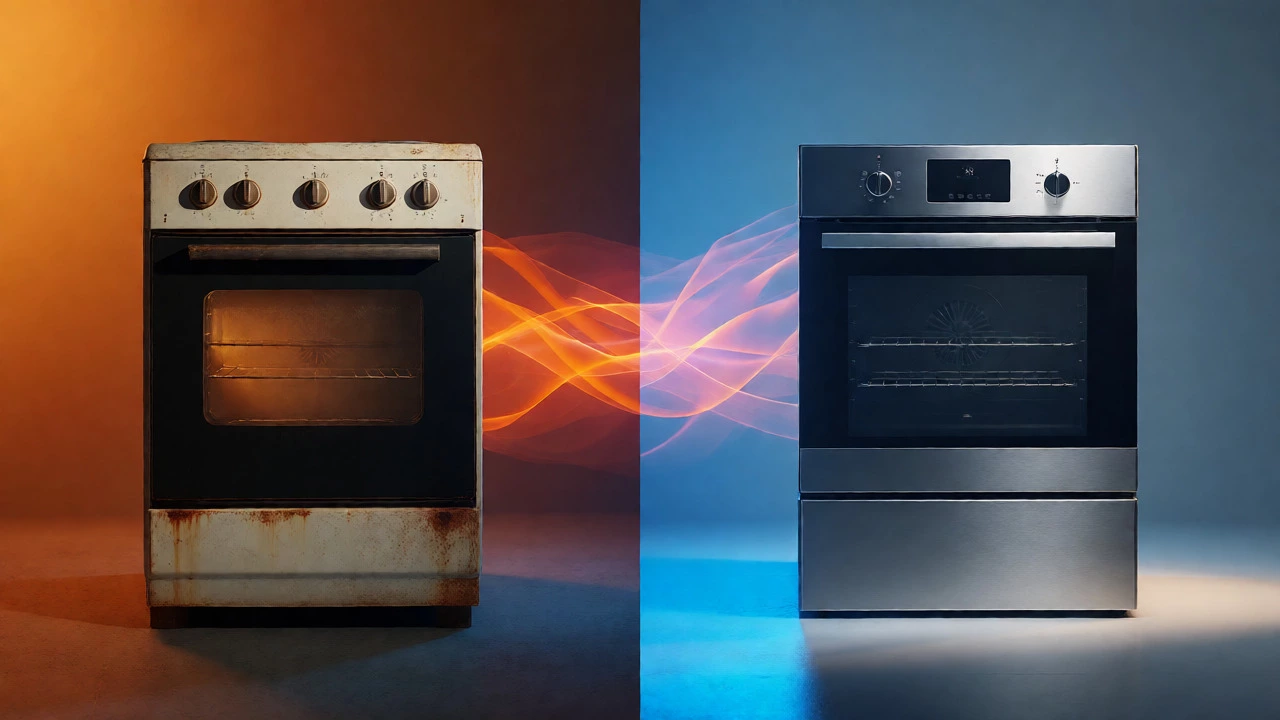
Many homeowners ignore the operational cost difference between old and new appliances. A 15-year-old electric oven is not nearly as efficient as a modern one. Older units often lack proper insulation and use less precise thermostats, leading to longer preheat times and inconsistent temperatures.
According to Natural Resources Canada, newer ENERGY STAR-certified ovens can use up to 10-15% less energy for certain cooking tasks compared to older non-rated models. While an oven isn’t the biggest energy hog in your home (that’s usually the fridge or furnace), those savings add up over years. More importantly, modern convection fans circulate air better, meaning you cook faster. If you bake frequently, the time saved is a tangible benefit.
Consider the safety angle too. Older ovens may have degraded wiring insulation. In humid kitchens, this increases the risk of short circuits or electrical fires. A new oven comes with updated safety standards and a warranty, providing peace of mind that an aging unit cannot match.
Finding Parts for Legacy Models in Canada
This is the practical hurdle most people underestimate. Manufacturers like Whirlpool, GE, Frigidaire, and Samsung change their designs frequently. A model sold in 2011 might share parts with a 2015 model, but by 2026, some specific components may be obsolete.
Before you decide to repair, check availability:
- Find the Model Number: It’s usually on a sticker inside the door frame or behind the drawer. Write it down.
- Search Online Retailers: Sites like PartSelect, AppliancePartsPros, or local Canadian distributors (like Encompass) allow you to search by model. If the site says "Discontinued" or "No Stock," you have your answer.
- Ask Your Technician: Good technicians know which brands are "part-friendly." Brands like Maytag and Whirlpool tend to support older models longer than niche European brands like Miele or Bosch, which can have very limited spare part windows.
If you live in Hamilton or the Greater Toronto Area, sourcing parts locally is easier due to the density of appliance repair shops. However, for specialized imports, shipping delays can turn a quick fix into a week-long ordeal.
DIY vs. Professional Service: Who Should Touch It?
Electricity is dangerous. Always unplug the oven or flip the breaker before attempting any repair. That said, some jobs are safe for homeowners, while others require licensed hands.
Safe for DIY:
- Replacing door seals/gaskets.
- Swapping bake/broil elements (usually just two screws).
- Cleaning igniters (for gas hybrids) or checking connections.
- Calibrating temperature settings.
Hire a Pro:
- Replacing control boards or touchpads.
- Working with internal wiring harnesses.
- Replacing the main terminal block (where power enters the oven).
- Any issue involving the fan motor assembly deep inside the chassis.
Remember, if you attempt a DIY repair and mess it up, you’ll pay double later. One wrong wire connection can fry a $200 board. Weigh your confidence level honestly.
Environmental Impact: E-Waste Considerations
There is a moral argument for repairing old appliances. Manufacturing a new oven consumes significant resources and generates carbon emissions. By extending the life of your current unit, you reduce waste. However, this only applies if the repair is minor. If you spend $400 fixing an oven that will last another year, versus buying a new one that lasts 15 years, the environmental math favors replacement.
In Ontario, disposing of large appliances requires special handling. You can’t just toss it in the blue bin. Municipalities like Hamilton offer bulk pickup services or designated drop-off points for e-waste. Factor this disposal effort into your decision if you choose to replace.
Final Verdict: What Should You Do?
So, should you repair that 15-year-old oven? Here is the checklist to make your final call:
- Repair if: The issue is a simple mechanical part (seal, element, light bulb), the part is available for under $100, and the rest of the oven looks clean and structurally sound.
- Replace if: The electronic control board fails, the repair quote exceeds $300, parts are discontinued, or you notice rust/damage beyond the surface.
- Consider Replacing if: You cook daily, want better energy efficiency, or are planning a kitchen refresh soon. The hassle of repeated breakdowns often outweighs the initial cost savings.
Don’t let sentimentality cloud your judgment. Fifteen years is a good run for an electric oven. If it’s giving you trouble, listen to it. Sometimes, the best repair is a fresh start.
How long does an electric oven usually last?
Most electric ovens have a lifespan of 10 to 15 years. With meticulous maintenance, some can reach 20 years, but major component failures become increasingly common after the 15-year mark.
Is it cheaper to repair or replace an old oven?
It depends on the fault. Minor fixes like seals or elements are cheaper to repair. Major electronic failures or structural damage usually make replacement more cost-effective in the long run due to recurring repair risks.
Can I find parts for a 15-year-old oven?
Yes, but availability varies by brand. Common brands like Whirlpool and GE often have parts available through third-party suppliers. Niche or premium brands may have discontinued specific components, making repairs difficult or impossible.
What are the signs my oven needs replacing?
Key signs include inconsistent temperatures despite calibration, excessive smoke, visible rust inside the cavity, flickering digital displays, and frequent breakdowns requiring multiple service calls within a year.
Do new ovens save money on electricity?
Newer ovens are generally more efficient due to better insulation and improved convection technology. While the direct electricity savings might seem modest annually, the time saved in cooking and reduced need for re-cooking adds indirect value.