Oven Repair vs. Replace Decision Tool
Enter your details to see the recommendation
Key Takeaways
- Repair is usually worth it if the cost is less than 50% of a new oven's price.
- Simple fixes like heating element replacements are high-value repairs.
- Control board failures in ovens over 10 years old often signal it's time to upgrade.
- Energy efficiency gains in newer models can sometimes outweigh the cost of a repair.
To make a smart choice, you need to understand the guts of your machine. An electric oven is a cooking appliance that uses electrical energy to heat resistors, typically creating heat via conduction or convection. Unlike gas ovens, they rely on high-wattage components that eventually burn out. When a part fails, you're essentially weighing the cost of a technician's visit and a spare part against the monthly payments of a brand-new unit.
The 50% Rule for Appliance Decisions
If you're stuck in a dilemma, use the 50% rule. If the electric oven repair cost exceeds 50% of the price of a comparable new model, stop. Toss it. Why? Because an old oven that needs a major repair today will likely need another one in twelve months. Parts degrade over time. If you spend $300 fixing a 12-year-old oven and then the door seal goes or the fan dies next month, you've thrown good money after bad.
Consider the age of the unit. Most modern electric ovens have a lifespan of about 10 to 15 years. If yours is at year 12, you're in the "danger zone." If it's only 4 years old, almost any repair is worth it because the chassis and insulation are still in prime condition.
When Repair is a No-Brainer
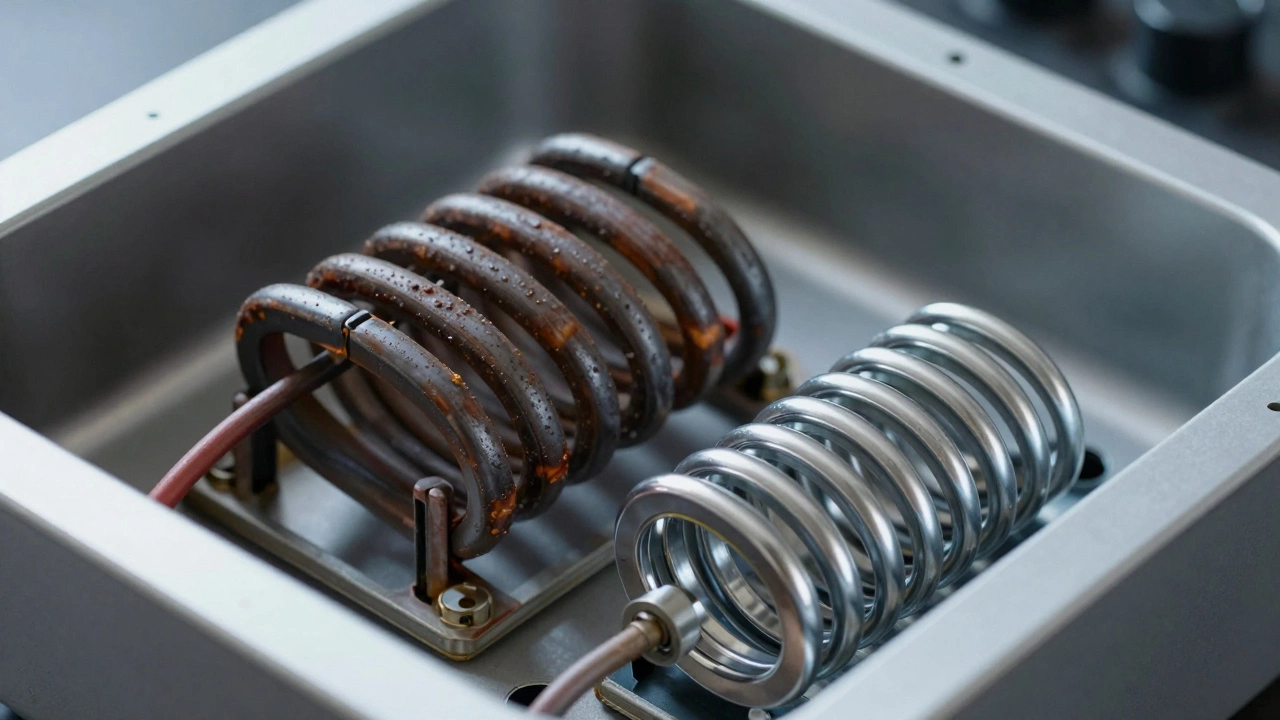
Some parts are designed to fail. They are consumables. When these break, fixing them is almost always the right move. Take the Heating Element is a metal coil that converts electricity into heat through resistance. These are the most common failure points in electric ovens. If your oven isn't heating from the bottom or top, it's likely just a burnt-out element. Replacing a bake element typically costs between $50 and $150 for the part, and a technician can swap it in 30 minutes. Compared to a $800 replacement oven, this is a huge win.
Similarly, a faulty Door Gasket is the rubber seal that prevents heat from escaping the oven cavity. If you see heat leaking or the door doesn't close tightly, the gasket is likely worn. This is a cheap part and a simple fix that instantly restores your energy efficiency.
| Common Failure | Estimated Repair Cost | Difficulty | Verdict |
|---|---|---|---|
| Bake/Broil Element | $100 - $250 | Low | Repair |
| Temperature Sensor | $150 - $300 | Low | Repair |
| Control Board (Main) | $300 - $600 | Medium | Think Twice |
| Convection Fan Motor | $200 - $400 | Medium | Repair if < 8 years old |
The Red Flags: When to Stop Spending
There are certain failures that act as a "death knell" for your appliance. The biggest culprit is the Electronic Control Board, the primary circuit board that manages timers, temperatures, and power distribution. If the brain of the oven dies, you're looking at an expensive part and a complex labor process. In older models, these boards are often no longer manufactured, making a repair impossible.
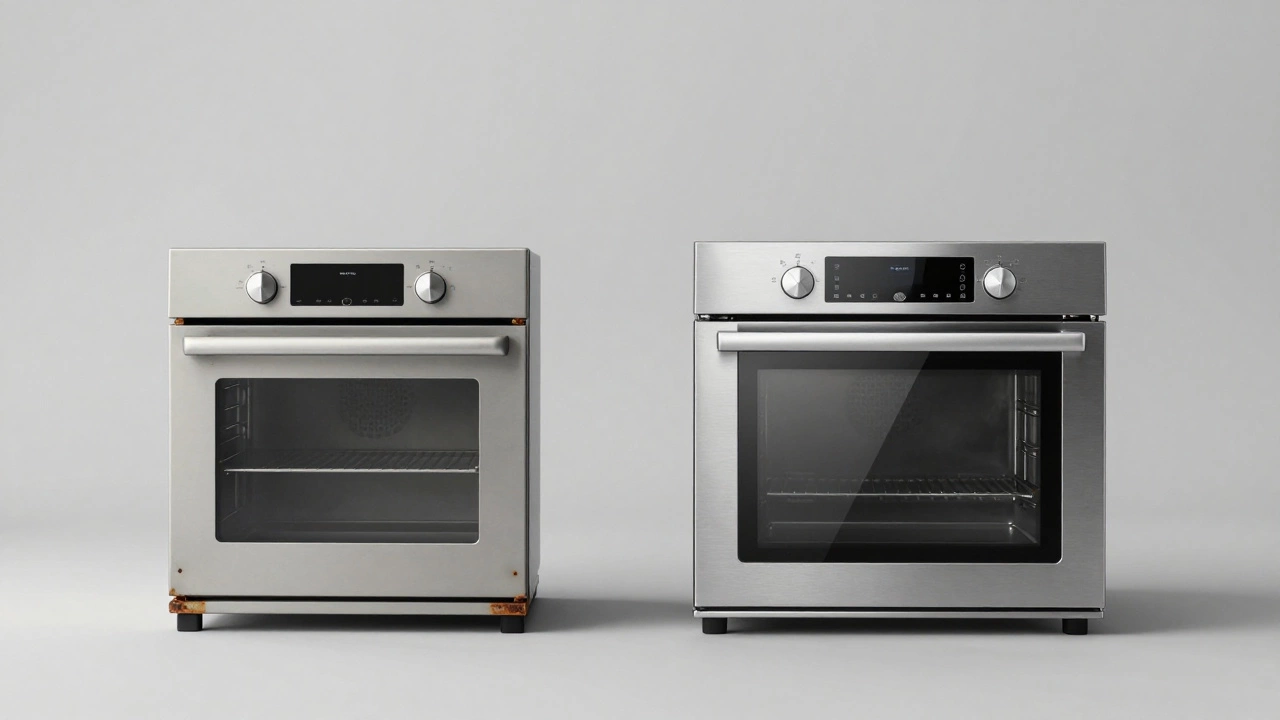
Another warning sign is structural failure. If the interior lining is peeling severely or the frame is rusting through, you aren't just dealing with a broken part; you're dealing with a degrading machine. Replacing a circuit board in a rusted shell is like putting a new engine in a car with no wheels.
Hidden Factors: Energy and Technology
Sometimes a repair is technically "worth it" on paper, but not in practice. If you're still using a basic electric oven from 2010, you're missing out on the efficiency of modern Convection Ovens, ovens that use a fan to circulate hot air for more even cooking and faster heat-up times. Newer models often use significantly less electricity to achieve the same results. If your monthly power bill is high, upgrading to a more energy-efficient model might actually pay for itself over 3-5 years.
Think about the features you actually use. Do you need a smart oven with Wi-Fi connectivity? If so, a repair won't give you that. If you just want something that bakes a cake evenly, stick to the repair route.
DIY vs. Professional Help
Can you do it yourself? If you're comfortable using a screwdriver and a multimeter, some fixes are easy. Replacing a heating element is a straightforward task-unplug the oven, unscrew the element, and plug in the new one. However, the moment you deal with the Electrical Wiring, the system of cables and connectors that deliver 240V power to the appliance, you need to be careful. Electric ovens use high voltage that can be lethal if handled incorrectly.
A professional technician brings diagnostic tools that can pinpoint a failure in minutes. If you spend four hours trying to find a short circuit and end up breaking a plastic knob, you've just added to the cost. If the problem is a flickering display or erratic temperature swings, a pro is the way to go.
The Long-Term Strategy
To avoid this stressful decision in the future, start a basic maintenance routine. Cleaning the crumbs from the bottom of the oven prevents the heating elements from getting bogged down and overheating. Checking the door seal every year ensures you aren't wasting 20% of your heat through a gap in the rubber. A little bit of care can push that 10-year lifespan toward 15 or 20 years.
How long do electric ovens usually last?
On average, a quality electric oven lasts between 10 and 15 years. High-end brands may last longer, while budget models often see component failures around the 7-to-10-year mark.
Is it expensive to replace an oven heating element?
Usually, no. Depending on the brand, the part itself costs between $40 and $120. With professional labor, you can expect to pay between $150 and $250 total.
Can I fix my oven if the digital display is blinking?
A blinking display often indicates a power surge or a failure in the control board. Try resetting the circuit breaker first. If that doesn't work, it's likely a control board issue, which is a more expensive and complex repair.
Will a new oven save me money on electricity?
Yes, generally. Modern ovens have better insulation and more efficient heating elements. Convection models are particularly efficient because they cook food faster at lower temperatures.
When is it definitely not worth it to repair?
It's not worth it if the oven is over 12 years old and the repair cost is more than 50% of a new unit's price, or if the main chassis is severely rusted or damaged.
Next Steps and Troubleshooting
If you're still unsure, start with these three steps:
- Check the Breaker: Go to your electrical panel. Sometimes a double-pole breaker trips only halfway, meaning the oven light works but the heating elements don't.
- The Visual Test: Turn the oven on and look at the elements. If it's a coil, does it glow red? If one part of the coil is dark while the rest is glowing, that element is burnt out.
- Get a Quote: Call a local repair service. Most will give you a rough estimate over the phone if you provide the model number and the symptoms.
For those who decide to replace, look for models with a high energy-star rating and a strong warranty on the heating elements. If you decide to repair, ensure the technician provides a guarantee on the parts and labor for at least 90 days.