When your electric oven stops heating, the first question many homeowners ask is: Can an electrician repair an electric oven? The answer isn’t as simple as yes or no - it depends on what’s broken. Most people assume electricians handle all things electrical, including appliances. But oven repair isn’t just about wiring. It’s a mix of electrical systems, heating elements, thermostats, and control boards. Knowing who to call - and when - can save you time, money, and frustration.
What Makes an Electric Oven Different?
An electric oven isn’t just a box with wires. It’s a complex appliance with multiple systems working together. The main components include:
- Heating elements (bake and broil)
- Thermostat or temperature sensor
- Control board (the oven’s brain)
- Relays and fuses
- Door switch and wiring harness
- Power supply (usually 240V circuit)
Each part has a specific job. If the oven doesn’t heat, it could be a failed bake element - a common, inexpensive fix. But if the display is blank or the oven won’t turn on at all, the issue might be deeper: a blown fuse, a faulty control board, or a tripped breaker. These require different skills to diagnose and fix.
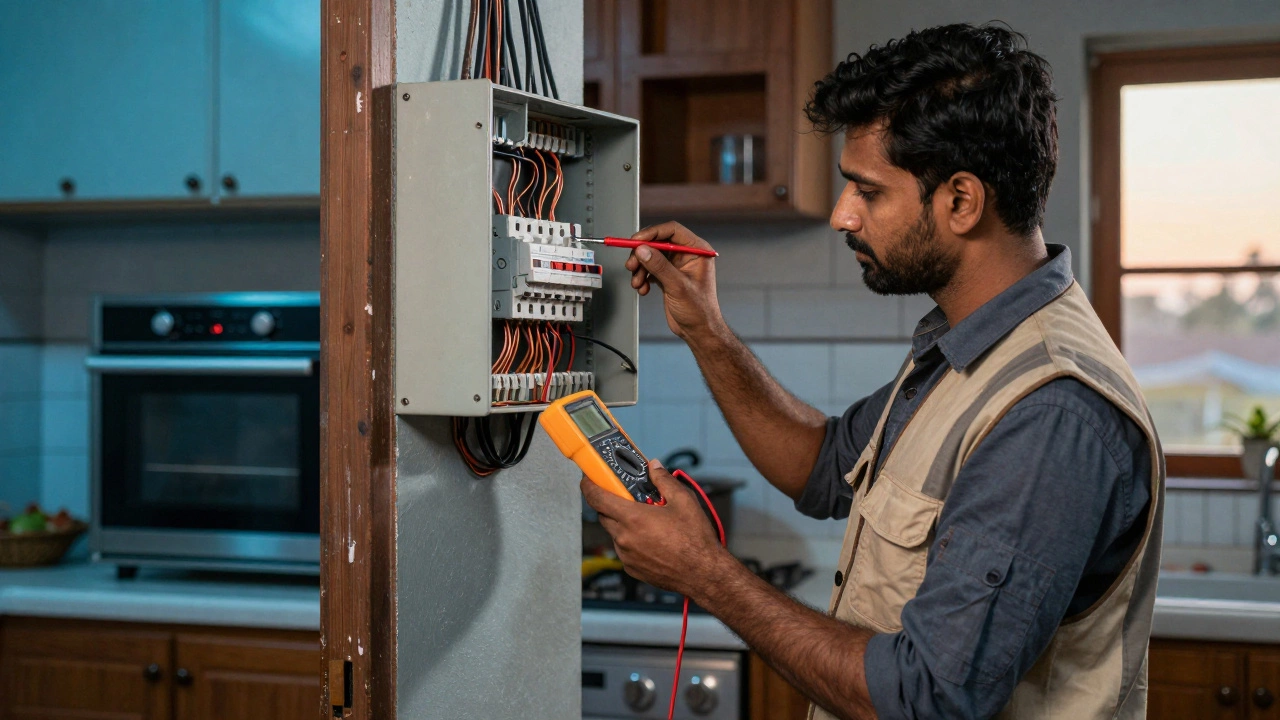
When an Electrician Can Help
An electrician is the right person to call if the problem is tied to your home’s electrical system. Here are clear signs:
- The oven won’t power on at all - no lights, no display
- The circuit breaker trips every time you use the oven
- You smell burning wires or see scorch marks near the outlet or junction box
- The oven is on a dedicated circuit that’s not delivering full 240V
- You’re installing a new oven and need wiring checked or upgraded
Electricians test voltage, check grounding, inspect wiring for wear or corrosion, and verify that the circuit can handle the oven’s load. In Hamilton, older homes often have outdated 100-amp panels that struggle with modern 5,000-watt ovens. An electrician can spot this before you even plug in the appliance.
When You Need an Appliance Technician
Most oven problems aren’t electrical - they’re appliance-specific. If the oven turns on but doesn’t heat properly, or heats unevenly, you need someone trained in appliance repair. These are classic signs:
- Bake element is dark, cracked, or doesn’t glow red
- Broil element works but bake doesn’t
- Oven temperature is off by more than 25°F
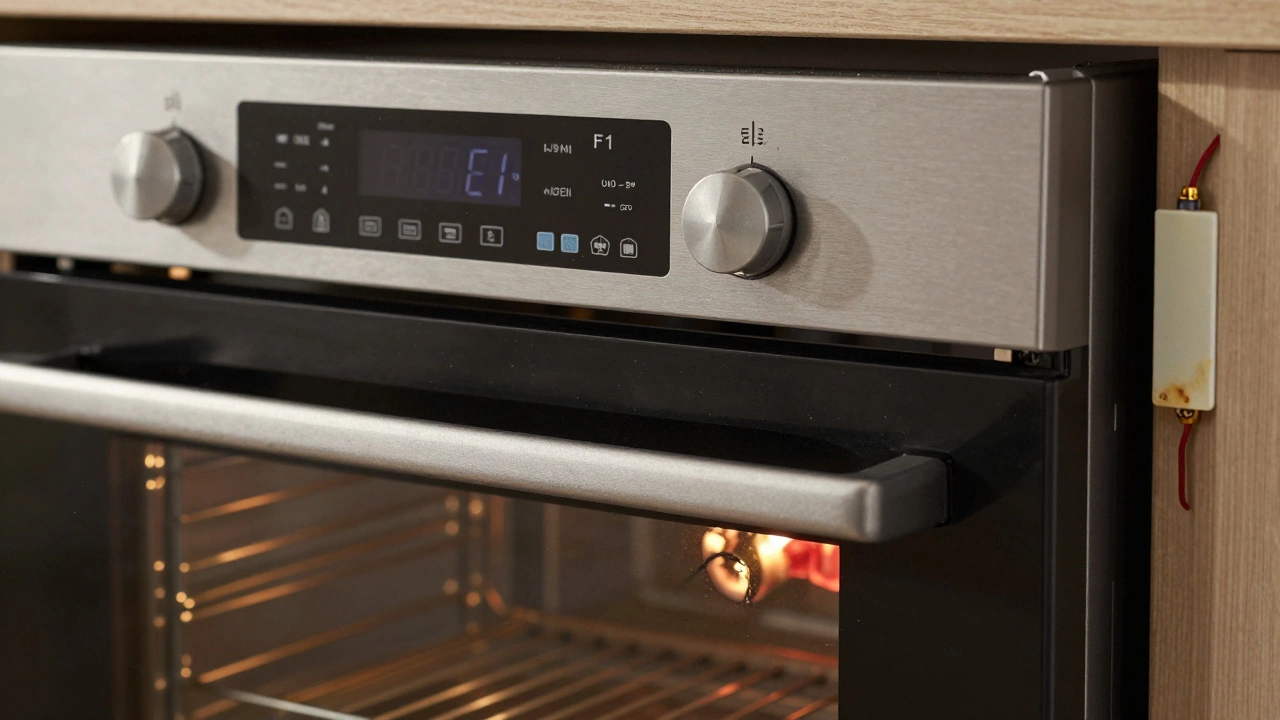
- Display shows error codes like F1, F3, or E6
- The door doesn’t latch properly or the light stays on
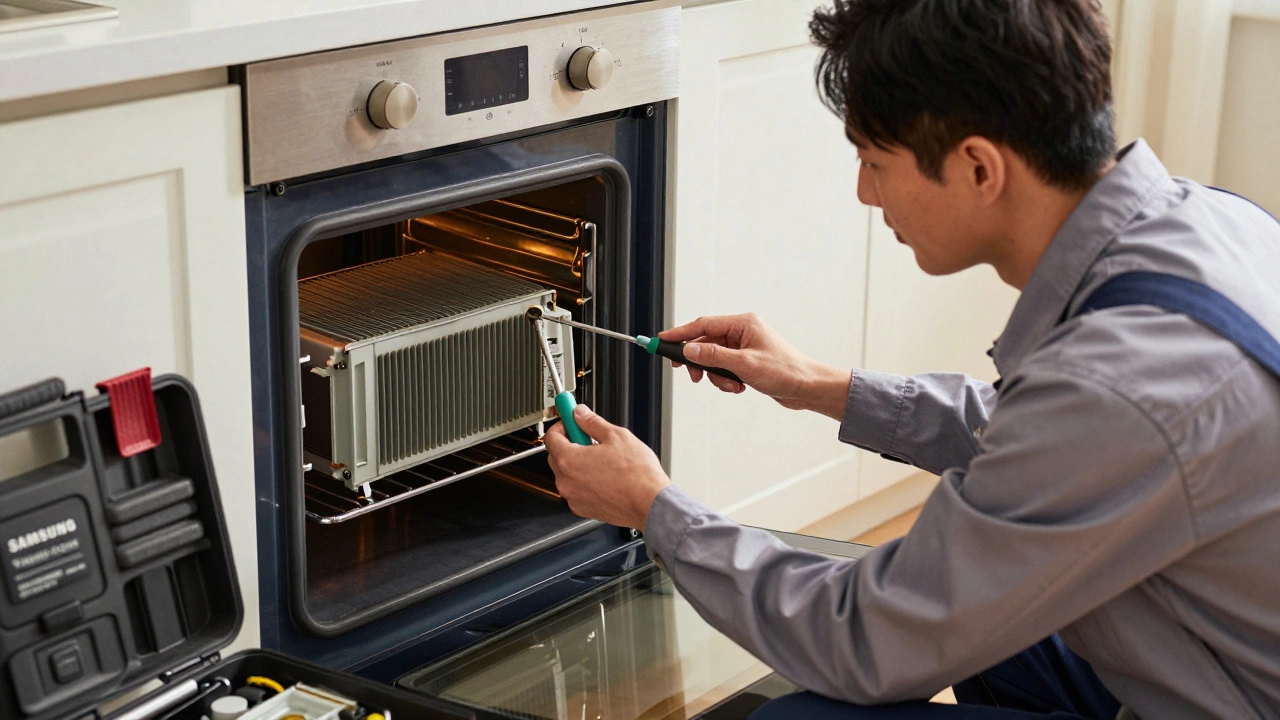
Appliance technicians carry the right tools to test heating elements with a multimeter, calibrate thermostats, replace control boards, and access internal components without damaging the cabinet. They also know which parts are specific to brands like Samsung, Whirlpool, or GE. An electrician might not have the right replacement parts on hand - or even know where to order them.
Why Mixing Roles Can Cost You
Calling an electrician for a broken bake element is like calling a plumber to fix a leaky faucet - they can probably do it, but they’ll charge more and take longer. Electricians typically charge $80-$150/hour. Appliance techs charge $70-$120/hour, and they’ll fix the problem faster because they’ve seen it 100 times before.
Worse, an electrician might misdiagnose the issue. I’ve seen cases where an electrician replaced a faulty breaker, thinking that was the problem - only to find out later the heating element had failed. The homeowner paid twice: once for the electrician, then again for the appliance tech.
On the flip side, if an appliance tech shows up and finds a loose neutral wire or a corroded junction box, they’ll tell you to call an electrician. But many don’t have the license or insurance to handle live wiring. That’s why some repair companies have both electricians and appliance techs on staff - and why it’s smart to ask upfront.
What to Do When Your Oven Breaks
Here’s a simple step-by-step guide to take action:
- Check the circuit breaker. If it’s tripped, reset it. If it trips again, stop using the oven and call an electrician.
- Look for visible damage. Is the bake element cracked? Is there a burnt smell? If yes, it’s likely a part failure - call an appliance tech.
- Test the oven light and fan. If they work but the oven doesn’t heat, the issue is likely internal heating components.
- Check for error codes on the display. Google the code + your oven model. You’ll often find a common fix.
- Call a certified appliance repair technician first. If they say the problem is electrical, they’ll refer you to an electrician.
Most appliance repair services offer a diagnostic fee of $50-$80, which is often waived if you go ahead with the repair. That’s a small price to pay to avoid the wrong fix.
Prevention Tips to Avoid Future Breakdowns
Electric ovens last 10-15 years with proper care. Here’s how to make yours last:
- Clean spills promptly - baked-on grime can overheat elements and cause failure
- Don’t use the self-clean function more than twice a year - it stresses the heating system
- Ensure proper ventilation - blocked vents can cause overheating
- Check the door seal annually. A loose seal makes the oven work harder
- Have your 240V circuit tested every 5 years, especially in homes older than 1990
These small habits cut repair calls in half. In Hamilton, where winters are harsh and appliances run harder, prevention is even more important.
Final Answer: Yes - But Only for Electrical Issues
Can an electrician repair an electric oven? Yes - but only if the problem is with the power supply, wiring, or circuit. For everything else - heating, temperature control, error codes, or component failure - you need an appliance repair technician. Don’t guess. Don’t waste money. Start with an appliance pro. If they say it’s electrical, then call the electrician. That’s the smart, cost-effective path.
Most homeowners try to fix ovens themselves - and end up with more broken parts. The right expert, at the right time, makes all the difference.
Can I fix my electric oven myself?
You can do basic checks like resetting the breaker or cleaning the element area, but don’t open the control panel or touch wiring unless you’re trained. Electric ovens run on 240 volts - enough to kill. Most internal failures require special tools and parts you won’t find at a hardware store. DIY fixes often make things worse.
How much does it cost to repair an electric oven?
Simple repairs like replacing a bake element cost $150-$250, including parts and labor. Control board replacements run $300-$500. If the oven is over 10 years old, it’s often cheaper to replace it entirely. Diagnostic fees are usually $50-$80, often waived if you proceed with the repair.
Do I need a 240V circuit for my electric oven?
Yes. All standard electric ovens require a dedicated 240V circuit with a 40-50 amp breaker. Older homes with 100-amp panels or shared circuits can’t safely power modern ovens. If your oven trips the breaker often, your wiring may be outdated. An electrician can test and upgrade the circuit if needed.
Why does my oven heat unevenly?
Uneven heating usually means one of the heating elements is failing, the thermostat is inaccurate, or the fan in a convection oven isn’t working. It’s rarely a wiring issue. A certified appliance technician can test each element and calibrate the temperature sensor. Cleaning the oven and checking the door seal also helps.
Should I repair or replace my electric oven?
If your oven is under 8 years old and the repair cost is less than half the price of a new one, repair it. If it’s older than 10 years, or if you’re facing multiple repairs (like a bad element and a failing control board), replacement is smarter. New models are 20-30% more energy-efficient and come with better warranties.