Electric Hob Thermal Shock Calculator
Risk Assessment
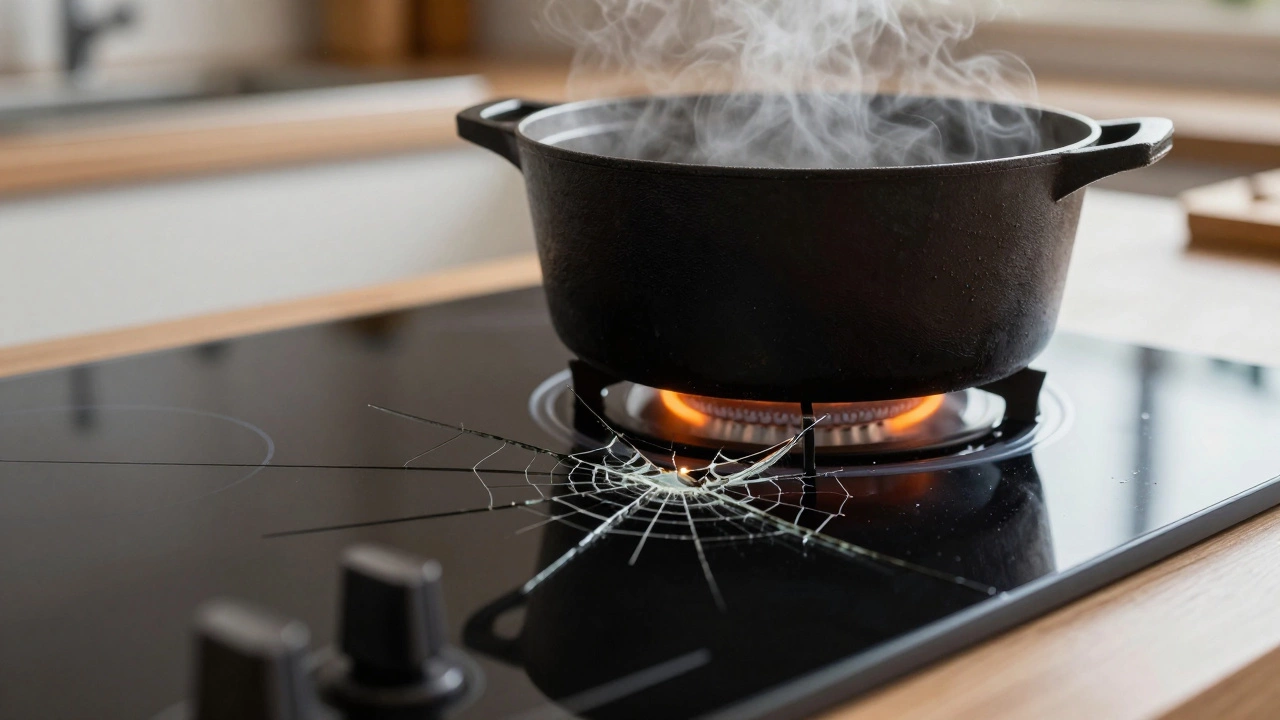
Nothing screams "problem" like the sound of glass shattering on your electric hob. You’re making dinner, the kids are laughing, and then-crack. A jagged line splits the smooth surface. You freeze. Is it dangerous? Can you still cook? And why did it happen in the first place?
Electric hobs, especially those with ceramic glass tops, are built to handle heat. But they’re not indestructible. A crack isn’t always from a dropped pot. More often, it’s the result of slow, silent stress building up over time. Let’s break down the real reasons your hob cracked-and what you can do about it.
Thermal Shock Is the #1 Culprit
Ceramic glass can handle high heat. But it hates sudden changes. Pour cold water on a hot hob? Drop a frozen pot onto it? That’s thermal shock. The surface heats up fast, but the cold spot doesn’t. The glass expands unevenly. That’s when cracks form-sometimes instantly, sometimes hours later.
Real-life example: A pot of frozen stew sits on the hob while you set the table. You turn the burner to high. The glass under the pot heats up fast. The edge, still cool, stays rigid. The tension builds. By the time you come back, a spiderweb crack has formed. No one dropped anything. No one meant to break it. Just physics.
Heavy or Uneven Pots Cause Stress Points
Not all cookware is created equal. A heavy cast iron Dutch oven? Fine. A warped, uneven-bottomed pan? That’s trouble. When the pan doesn’t sit flat, pressure builds in one spot. Over time, that spot gets stressed. The glass can’t flex. It cracks.
Check your pans. If they wobble when you set them down, replace them. A flat, smooth bottom isn’t just for even cooking-it’s for protecting your hob. Also, avoid dragging pots across the surface. Slide them gently. Scratches weaken the glass over time.
Manufacturing Flaws Happen (But Rarely)
Most hobs are built to last. But every now and then, a batch has a weak spot. Maybe the glass was cooled too fast during production. Or a tiny air bubble got trapped. These defects aren’t visible at first. But under normal use-heat cycles, occasional spills-they can grow into cracks.
If your hob cracked within the first year and you’ve used it properly, check your warranty. Some brands cover manufacturing defects for up to five years. Don’t assume it’s user error. Get it inspected.
Impact Damage Isn’t Always Obvious
You didn’t drop a pan? Maybe you dropped a metal spoon. Or a jar of spices. Or your kid tossed a toy near the hob. Small impacts can create micro-fractures. They look like nothing. But each time you turn on the burner, heat pushes into those weak spots. Eventually, they spread.
Look closely at the crack. Does it start near a corner? Near a control knob? That’s a clue. Impact damage often begins where the glass is thinnest or least supported.
Old Age and Repeated Heat Cycles
Electric hobs don’t last forever. Most last 10 to 15 years. After that, the glass starts to fatigue. Think of it like a rubber band. Stretch it once-it snaps back. Stretch it 10,000 times? It weakens. Same with the glass.
If your hob is older than 12 years and you’re seeing cracks, it’s likely wear and tear. Not a mistake. Just time. The material has done its job. Replacing it isn’t a repair-it’s an upgrade.
What to Do If Your Hob Cracks
First: Turn off the power. Unplug the unit or shut off the circuit breaker. Don’t touch the crack. Don’t try to glue it. Don’t use it.
Second: Clean up carefully. Use a damp cloth. Avoid metal scrapers. Glass shards can be sharp. Wear gloves.
Third: Call a technician. Not every crack needs a full replacement. Sometimes, only the glass panel needs swapping. A pro can tell you if the heating elements or wiring are still good. Replacing just the top can cost 40% less than a whole new hob.
Fourth: If it’s under warranty, contact the manufacturer. Keep your receipt. Take photos. They may cover the part, even if you have to pay for labor.
How to Prevent Future Cracks
- Use only flat-bottomed, undamaged cookware.
- Let pots cool before cleaning. Never rinse a hot hob with cold water.
- Turn off burners before removing pots. Let the surface cool naturally.
- Keep the surface clean. Buildup under pots traps heat and causes hot spots.
- Don’t place hot lids or metal utensils directly on the glass after cooking.
- Replace old hobs after 12+ years. Don’t wait for a crack.
When to Replace vs. Repair
Here’s the simple rule: If the crack runs across the cooking zone or near the control panel, replace the whole hob. You can’t safely repair a crack that crosses a heating element. Electricity and water don’t mix. Even a tiny crack can let moisture in. That’s a shock hazard.
If the crack is small, isolated, and away from wiring, you might get away with replacing just the glass top. Costs range from $150 to $400 depending on the model. A new hob runs $600 to $1,500.
Ask yourself: Is your hob worth fixing? If it’s 10 years old, has other slow issues (like uneven heating), or if the brand is no longer made-it’s time to upgrade.
Why Other Fixes Don’t Work
You might see online videos showing epoxy or ceramic glue fixes. Don’t try them. These aren’t heat-resistant enough. They can melt, bubble, or release fumes. Worse-they hide the problem. The crack keeps growing. You think it’s fixed. Then one day, the glass shatters while you’re cooking.
There’s no safe DIY fix. Not for safety, not for longevity. This isn’t a cracked phone screen. This is a high-heat electrical appliance.
What’s the Risk of Using a Cracked Hob?
It’s not just about broken glass. The real danger is electrical. The glass isn’t just a surface-it’s a barrier between the heating coil and your kitchen. A crack can let steam, grease, or water seep in. That can short out the wiring. Or cause a spark. Or worse.
One homeowner in Hamilton reported a small electrical fire after using a cracked hob for two weeks. The crack let in moisture. The wire under the glass corroded. It sparked. The fire was small. The damage? $4,000 in repairs.
Don’t gamble. Even a tiny crack is a warning sign.
Can I still use my electric hob if it has a small crack?
No. Even a small crack can let moisture or grease reach the heating elements underneath. This can cause short circuits, sparks, or electrical fires. It’s not worth the risk. Turn off the power and stop using it immediately.
Why did my hob crack without anything being dropped on it?
Thermal shock is the most common cause. That means placing a cold pot on a hot surface, or pouring cold water on a hot hob. Even a slight temperature difference over time can stress the glass until it cracks. Heavy or warped pots can also create pressure points that lead to cracking over months or years.
Is it cheaper to repair or replace a cracked electric hob?
Replacing just the glass top usually costs between $150 and $400. A full new hob runs $600 to $1,500. If your hob is under 10 years old and the rest works well, replacing the glass is the smart choice. If it’s older, has other issues, or the model is discontinued, it’s better to replace the whole unit.
Can I fix a cracked hob with super glue or ceramic epoxy?
No. Most household glues can’t handle the heat. They’ll melt, bubble, or release toxic fumes. Worse, they hide the crack, giving you a false sense of safety. The crack will keep growing. This increases the risk of electrical failure. Never attempt a DIY glue fix.
How long do electric hobs usually last before they crack or fail?
Most electric hobs last 10 to 15 years with normal use. Cracks often appear near the end of that life, especially if the unit was exposed to thermal shock or heavy cookware. If your hob is older than 12 years and has cracked, it’s likely just worn out-not because of misuse.