Water Heater Leak Locator
Click on the area where you see water pooling or dripping to diagnose the issue.
Diagnostic Result
Select a leak location on the diagram to view diagnosis and repair steps.
Water on the floor is never a good surprise. It ruins flooring, creates slip hazards, and if it’s coming from your water heater, a large appliance that heats and stores domestic hot water for household use, it signals a problem that will only get worse. You might think leaks are random, but they usually happen in specific spots. Knowing exactly where these weak points are can save you hundreds of dollars in unnecessary replacements or emergency repairs.
The most common places for a leak to start are the connections at the top of the unit, the pressure relief valve, and, unfortunately, the bottom of the tank itself. Each location tells a different story about what is going wrong inside your system. Let’s walk through the likely culprits, starting from the top down, so you can pinpoint the issue before it becomes a flood.
Leaks at the Top: Pipe Connections and Fittings
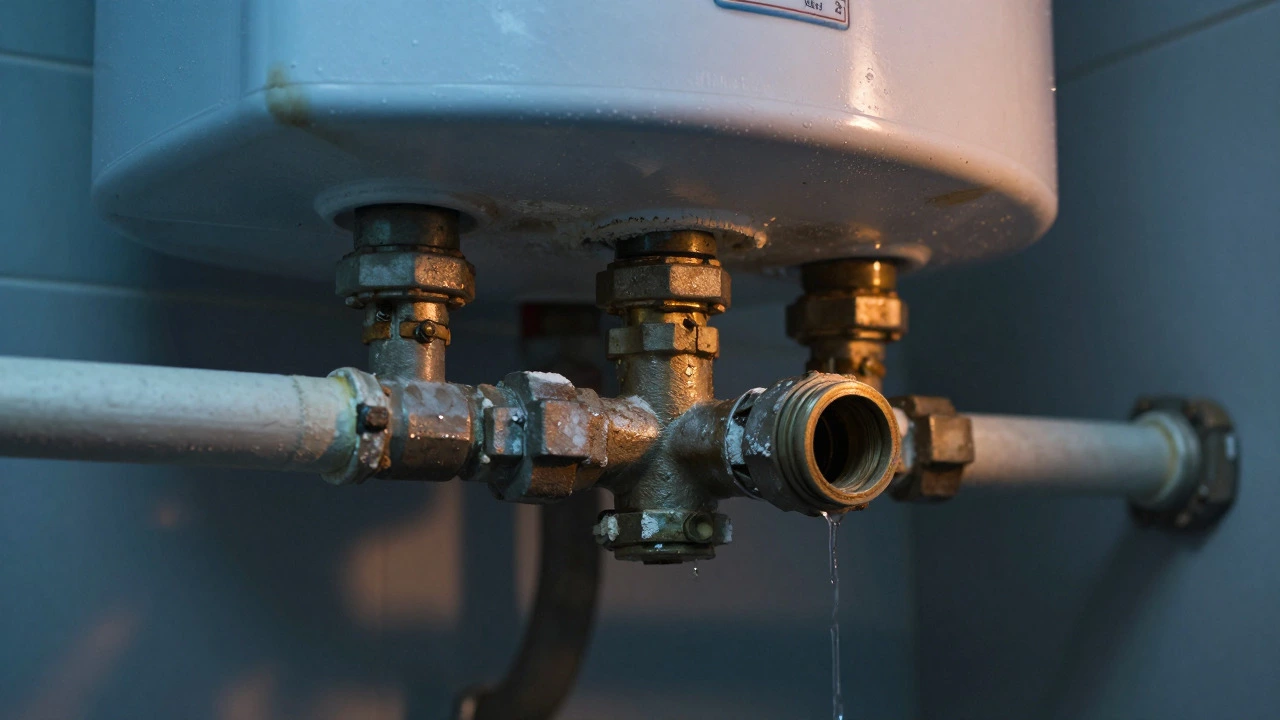
If you see water pooling near the base of the unit but the tank itself looks dry, look up. The majority of "tank leaks" are actually just loose fittings or failing seals at the connection points. There are two main pipes attached to the top of your water heater: the cold water inlet and the hot water outlet.
The Cold Water Inlet
This pipe brings fresh, cold water into the tank. Over time, the dielectric union (the fitting that connects copper pipe to steel tank) can corrode. If you live in an area with hard water, mineral buildup can also crack the rubber washer inside the fitting. When this happens, water seeps out along the side of the pipe and drips down the tank, making it look like the tank is leaking from the bottom. Tightening the nut often fixes minor seepage, but if the threads are stripped or the union is corroded, you need a new dielectric nipple.
The Hot Water Outlet
The hot water line carries heated water to your taps. Because this side deals with higher temperatures, the thermal expansion and contraction are more intense. This stress can loosen the elbow joint connecting the pipe to the tank. Check if the water dripping is warm. If it is, the leak is definitely coming from the hot water side. Sometimes, the dip tube inside the tank breaks, causing cold water to mix with hot water at the top, which can increase pressure and force water out of loose seals.
| Leak Source | Symptoms | Common Cause | Difficulty to Fix |
|---|---|---|---|
| Cold Water Inlet | Cool water dripping, corrosion on fitting | Corroded dielectric union, failed washer | Moderate (requires shut-off) |
| Hot Water Outlet | Warm/hot water dripping, loose elbow | Thermal expansion, loose threading | Easy to Moderate |
The Temperature and Pressure (T&P) Relief Valve
Located on the side or top of the tank, the T&P relief valve, a safety device designed to release excess pressure or temperature from the water heater tank is a critical component. Its job is to prevent the tank from exploding if pressure gets too high. However, it is also a frequent source of leaks.
If you notice water trickling out of the discharge pipe (the plastic or metal tube running down the side of the heater), the valve might be doing its job correctly by releasing excess pressure, or it might be faulty. There are three main reasons a T&P valve leaks:
- High Water Pressure: If your home’s incoming water pressure exceeds 80 psi, the valve opens periodically to relieve the strain. You should install a pressure-reducing valve if this is the case.
- Overheating: If the thermostat is set too high (above 140°F / 60°C), the water expands rapidly, triggering the valve.
- Debris Buildup: Sediment from the tank can get stuck under the valve seat, preventing it from closing tightly. Try lifting the handle gently once to flush out debris. If it continues to drip, the valve needs replacement.
A leaking T&P valve is dangerous because it indicates your system is under stress. Ignoring it can lead to catastrophic failure. Always direct the discharge pipe to a safe drainage area, not just onto the floor.
Condensation vs. Real Leaks
Before you panic, check if the water is actually a leak. During humid summer months or when the tank is heating up cold water after being unused, condensation can form on the outside of the steel tank. This looks exactly like a leak, with water dripping down the sides and pooling at the bottom.
To test this, wipe the tank completely dry with a towel. Turn off the power (or gas) to the heater and wait 30 minutes. If the water returns without the heater running, it’s a real leak. If it only appears when the heater is active and the ambient air is humid, it’s condensation. Improving ventilation around the unit or insulating the tank can help reduce this effect.
The Bottom of the Tank: Internal Corrosion
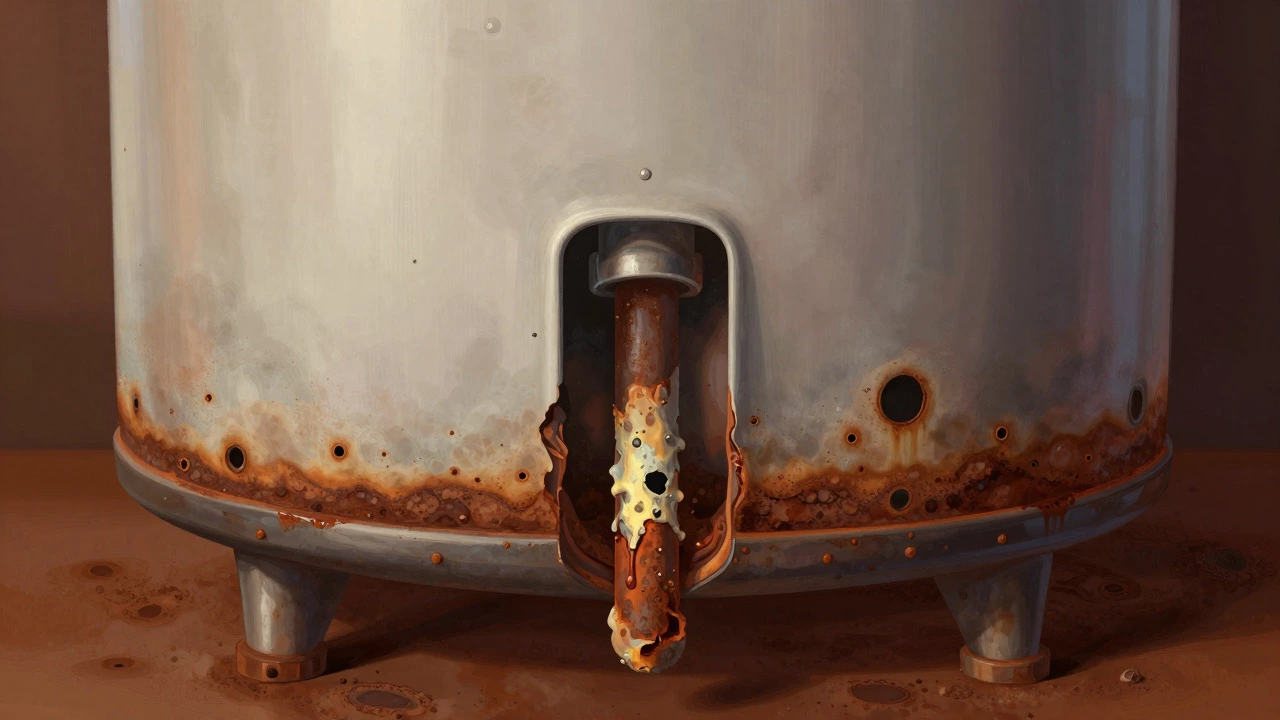
This is the scenario nobody wants. If you have ruled out the top fittings, the T&P valve, and condensation, and you still see water pooling directly beneath the center of the tank, the tank itself has likely failed. This is caused by internal corrosion.
Inside your water heater, a magnesium or aluminum sacrificial anode rod, a metal rod installed in the water heater tank to attract corrosive elements and protect the steel lining protects the steel tank from rusting. Once this rod dissolves completely, the corrosive elements in the water attack the steel tank. Tiny pinhole leaks appear, usually at the bottom where sediment accumulates. These holes expand over time, leading to a major rupture.
Unlike pipe fittings, a leaking tank cannot be repaired. The structural integrity of the vessel is compromised. At this stage, the only option is to replace the entire water heater. If your unit is older than 10 years, this is a strong indicator that it has reached the end of its lifespan.
Drain Valve Leaks
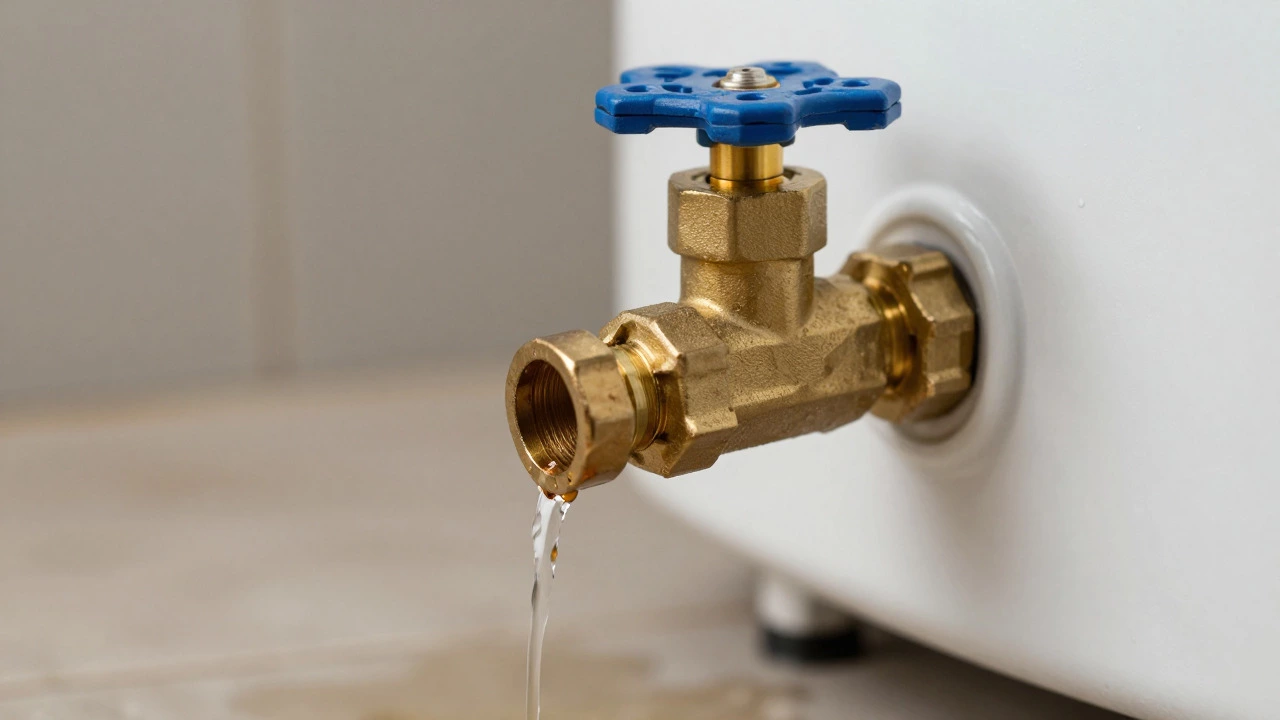
Located at the very bottom of the tank, the drain valve is used to empty the heater for maintenance. If this valve is left slightly open after flushing the tank, or if the internal seal degrades, water will slowly leak out. This leak is usually steady and clear. Tightening the valve handle might stop a minor drip, but if the valve body is cracked or the seal is worn, replacing the drain valve is necessary. Note that some manufacturers weld the drain valve directly to the tank; in those cases, a leak here means the tank must be replaced.
When to Call a Professional
You can handle minor tightening of fittings or replacing a T&P valve yourself if you are comfortable with basic plumbing. However, call a professional plumber if:
- The leak is coming from the bottom of the tank (internal corrosion).
- You smell gas near the water heater (shut off the gas immediately and evacuate).
- The water pressure in your home is consistently above 80 psi.
- You are unsure how to shut off the water supply safely.
In Hamilton and surrounding areas, water quality varies, which affects how quickly anode rods dissolve. Regular annual inspections can catch small leaks at the fittings before they become big problems. Don’t wait for the floor to warp-identify the source early.
How do I stop a water heater from leaking temporarily?
First, turn off the power (electricity or gas) to the heater to prevent overheating. Next, close the cold water supply valve to stop new water from entering. Place a bucket under the leak and open a hot water tap elsewhere in the house to drain some pressure from the tank. For minor fitting leaks, tightening the connection may help, but for tank leaks, there is no temporary fix other than draining the unit completely.
Is it worth repairing a leaking water heater tank?
No. If the leak is coming from the steel tank itself due to corrosion, it cannot be permanently repaired. Welding patches are unreliable and risky under high pressure. Replacement is the only safe long-term solution. If the leak is from a pipe fitting or valve, repair is cost-effective and recommended.
Why is my water heater leaking from the top?
Top leaks are usually caused by loose pipe connections, corroded dielectric unions, or a failing T&P relief valve. Condensation can also mimic a leak during humid weather. Check the temperature of the dripping water: cool water suggests a cold inlet issue, while warm water points to the hot outlet or internal pressure issues.
Can a water heater leak cause electrical hazards?
Yes. Water and electricity are a dangerous combination. If water pools around the base of an electric water heater, it can reach the wiring compartment or control panel, causing short circuits or electrocution risks. Always turn off the breaker at the main panel before inspecting a leaking electric heater.
How often should I flush my water heater to prevent leaks?
It is recommended to flush your water heater once a year. This removes sediment buildup that can corrode the tank from the inside and reduce efficiency. Flushing also helps keep the drain valve and T&P valve clear of debris, reducing the likelihood of mechanical leaks.