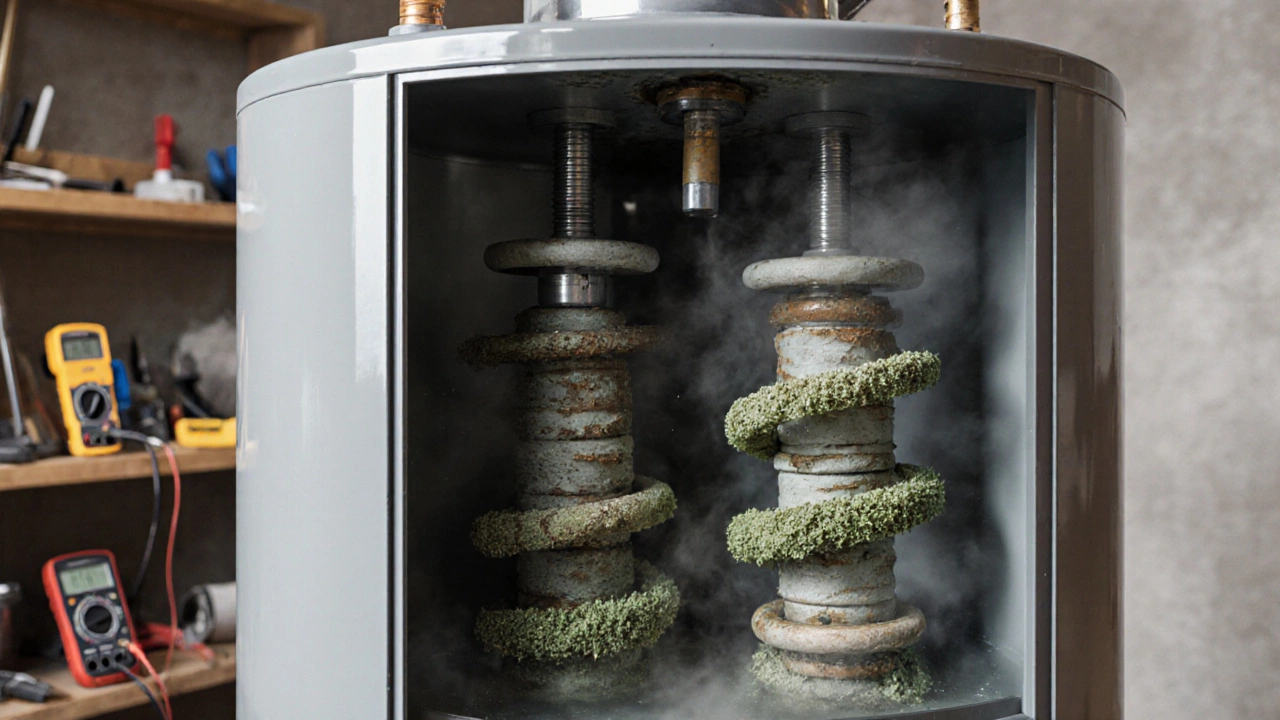
If your hot water runs out too fast or takes forever to heat up, your water heater element may be bad. Learn the 7 clear signs and how to test or replace it yourself.
Water Heater Element Test: How to Check If Your Heating Element Is Faulty
When your water heater element, the part inside your tank that heats the water using electricity. Also known as heating element, it is one of the most common reasons your hot water stops working. If you’re running out of hot water faster than usual—or worse, getting none at all—it’s likely the element has burned out. This isn’t a mystery. It’s a simple mechanical failure, and you can test it yourself with a multimeter and 10 minutes of time.
Most electric water heaters have two elements: an upper and a lower. The upper kicks in first to heat the top of the tank, then the lower takes over to heat the rest. If one fails, you might still get some hot water—but not enough for a full shower. A bad thermostat, the control that tells the element when to turn on and off. can also cause this, but it often trips the reset button. If the reset button keeps popping, that’s a clue the element is pulling too much current or the tank has heavy sediment buildup. And if you hear popping or crackling sounds from the tank? That’s mineral deposits cooking on the element. It’s not just inefficient—it’s wearing it out faster.
Testing the element isn’t hard, but safety comes first. Turn off the power at the breaker. Then drain a few gallons from the tank to lower the water level below the element. Remove the access panel and insulation. You’ll see two metal terminals sticking out. Use a multimeter set to ohms (Ω). Touch one probe to each terminal. If you get a reading between 10 and 30 ohms, the element is fine. If you get zero or infinite resistance, it’s dead. Now test from each terminal to the metal casing—if you get any reading there, the element is shorted and must be replaced. This test takes less than five minutes. No tools beyond a screwdriver and a $20 multimeter.
You’ll find plenty of guides online that say you need to call a plumber. But most of the time, it’s not the tank, not the pipes, not the wiring—it’s just the element. Replacing it costs under $30 and takes an hour. And if you’ve got a 10-year-old water heater? You might be better off replacing the whole unit. Older tanks rust from the inside, and even a new element won’t fix that. But if your tank is under five years old and you’ve been maintaining it, replacing the element is the smart move.
Below, you’ll find real-world guides from people who’ve been there. They show you how to spot the signs before the water goes cold. They walk you through testing the element, checking the thermostat, and deciding whether to fix it or replace the whole system. Some even share how sediment buildup kills elements faster—and how to flush the tank to make your next element last longer. No fluff. No theory. Just what works.