Quick Decision Guide
- Repair if: The cost is under 50% of a new model, the unit is under 8 years old, or it's a simple component failure (like a start relay).
- Replace if: The compressor is dead on an old unit, there's a refrigerant leak in the sealed system, or the unit is 10+ years old.
- The Rule of Thumb: Use the "50% Rule"-if the repair bill exceeds half the cost of a modern, energy-efficient replacement, buy new.
The Big Ticket Items: What Actually Costs Too Much to Fix
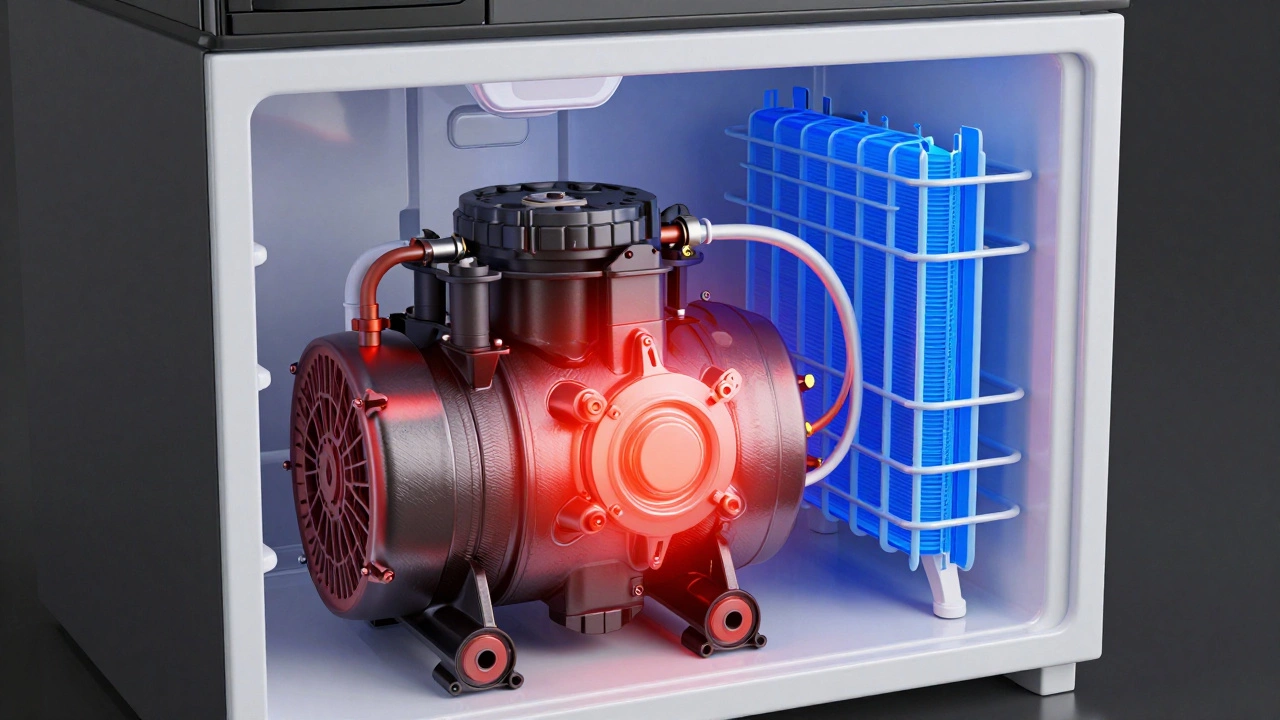
Not all repairs are created equal. Some are quick wins; others are financial traps. To figure out if freezer repair is worth it, you have to know which part failed.First, let's talk about the Compressor is the heart of the cooling system, acting as a pump that moves refrigerant through the coils. If your compressor dies, you're looking at the most expensive repair possible. Between the part itself and the labor to weld new lines and vacuum the system, you could easily spend $300 to $600. On a budget chest freezer that costs $250 new, this is a no-brainer: replace it. Even on a high-end unit, a failed compressor on a machine that's 7 years old is usually a sign that the rest of the system is tired.
Then there are refrigerant leaks. Refrigerant is the chemical medium (like R-600a or R-134a) used to absorb heat from the interior and release it outside. If your freezer has a leak in the evaporator coils, a technician can patch it and recharge the gas. However, leaks often happen because of corrosion. If the coils are rusting, the leak will likely return in another spot. In this scenario, the "fix" is just a temporary bandage.
The "Easy Wins": When Repair is the Only Logical Choice
On the flip side, many freezers stop working because of a tiny, cheap part. If you're seeing a flashing light or hearing a clicking sound but the freezer isn't cooling, you might be dealing with a Start Relay, which is a small device that gives the compressor the electrical push it needs to start running. These parts often cost less than $30. Replacing a relay is a 20-minute job that can save a $800 appliance from the landfill.Similarly, Evaporator Fans-the blades that move cold air around the cabinet-can fail. If you hear a grinding noise or no air movement at all, a fan replacement is usually affordable and straightforward. Other common low-cost culprits include:
- Thermostats: A faulty temperature sensor can trick the freezer into thinking it's already cold enough, so it never turns on.
- Defrost Timers: If your freezer is frosting up and losing cooling power, the timer might be stuck, preventing the auto-defrost cycle.
- Door Seals: A torn gasket lets cold air out and warm air in. Replacing a seal costs very little compared to the energy bill spike caused by a leak.
| Component | Avg. Repair Cost | Difficulty | Verdict |
|---|---|---|---|
| Start Relay | $50 - $150 | Low | Always Repair |
| Thermostat/Sensor | $100 - $200 | Medium | Repair if < 8 years old |
| Evaporator Fan | $150 - $250 | Medium | Repair if < 7 years old |
| Compressor | $400 - $700 | High | Replace unless brand new |
| Refrigerant Leak | $300 - $500 | High | Replace if corrosion is present |
The Age Factor: The Hidden Cost of Old Tech
Age isn't just about when the machine might break; it's about how much it costs to run. If you have a freezer from 2010, it likely uses older, less efficient refrigerants and has much lower insulation quality.Modern Inverter Compressors, found in many newer high-efficiency models, operate at variable speeds rather than just "on or off." This significantly reduces electricity consumption. If you spend $300 fixing a 15-year-old freezer, you might be ignoring the fact that a new, Energy Star certified unit could save you $50 to $100 a year on your power bill. Over three years, the new machine practically pays for the repair cost you avoided.
Think of it like an old car. You can replace the alternator and the battery, but you're still driving a gas-guzzler with no airbags. A freezer is a "silent" expense; you don't see the money leaving your wallet until the end of the month, but the inefficiency of an old unit is a constant drain.
DIY Diagnostics: How to Check Before Calling a Pro
Before you pay a technician a $100 diagnostic fee, spend ten minutes doing some basic detective work. You might find the "broken" freezer is actually just a maintenance issue.- Check the Condenser Coils: Look at the back or bottom of the unit. If the coils are covered in a thick blanket of dust and pet hair, the compressor can't release heat. It will overheat and shut down. Vacuum them out-this fixes about 30% of "dead" freezers.
- Listen for the Hum: If the lights are on but there's no humming sound, the compressor isn't running. If it's humming but not cooling, you might have a refrigerant issue or a failed start capacitor.
- The "Click" Test: If you hear a click every few minutes followed by silence, the compressor is trying to start but failing. This is almost always a failed start relay.
- Check for Frost Build-up: If the back wall is covered in thick ice, your defrost system has failed. Try manually defrosting the unit (turning it off and letting it melt for 24 hours). If it works fine for a week and then freezes up again, you have a faulty defrost heater or timer.
Environmental Impact: Repairing vs. Recycling
There's a moral component to this decision. Freezers contain CFCs or HFCs (hydrofluorocarbons), which are potent greenhouse gases. When you toss an old freezer in a landfill, these gases can leak into the atmosphere.If you decide to replace your unit, don't just leave it on the curb. Look for a certified recycler who performs "refrigerant recovery." This process sucks the chemicals out of the system safely before the metal is crushed. Repairing a unit is always the "greenest" choice because it prevents a massive piece of steel and plastic from entering the waste stream, provided the repair doesn't involve leaking old-school freon into the air.
How long do most freezers usually last?
On average, a quality freezer lasts between 10 and 15 years. Chest freezers often last longer than upright models because they have fewer moving parts (like fans) and don't suffer from as much temperature loss when opened.
Can I fix a freezer leak myself?
Generally, no. Working with refrigerants requires a specialized license and vacuum pumps to remove air and moisture from the lines. Attempting to patch a sealed system without the right tools usually results in a total loss of the appliance.
Why is my freezer running but not getting cold?
This is usually caused by one of three things: dirty condenser coils preventing heat release, a failed evaporator fan that isn't circulating air, or a leak in the refrigerant system. Start by cleaning the coils before calling a pro.
Is it worth replacing just the door seal?
Yes, absolutely. A bad seal makes your compressor work twice as hard, which shortens the life of the entire machine and spikes your electric bill. It's one of the most cost-effective repairs you can do.
What is the most common cause of freezer failure?
The most common failures are related to the start relay (electrical failure) or the defrost system (mechanical/timing failure). Both are typically much cheaper to fix than the compressor itself.
Next Steps for Your Freezer
If you're still on the fence, here is a quick action plan based on your situation:- If you're on a tight budget: Spend 30 minutes cleaning your coils and checking the power supply. If that doesn't work, look up the model number and check the price of a "start relay" online. If it's under $40, try replacing it yourself.
- If you're weighing a pro's quote: Ask the technician exactly which part failed. If they say "sealed system" or "compressor," and your unit is older than 7 years, start shopping for a new one.
- If you're buying new: Look for units with an
Energy Starrating. The higher upfront cost is usually offset by lower monthly utility bills within 3-5 years.