Kitchen Fan Diagnostic Tool
Follow these steps to determine if your fan needs a simple cleaning or a professional repair.
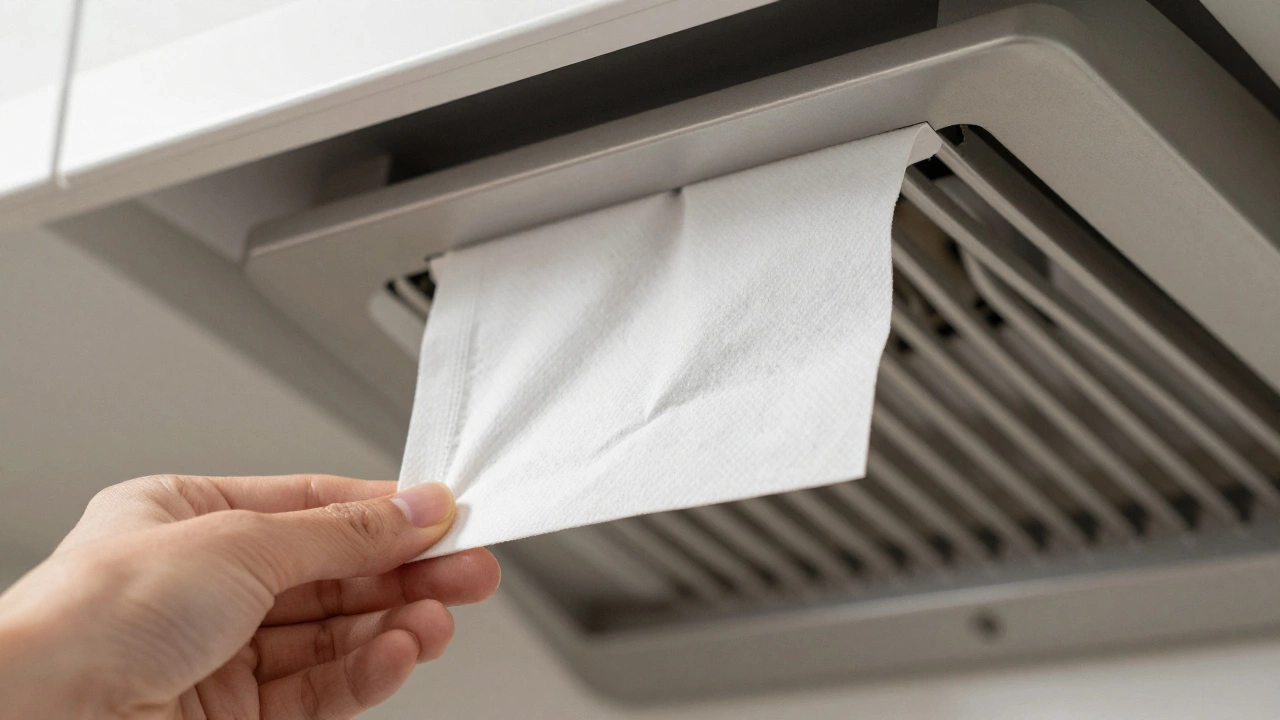
Turn fan to high and hold a piece of tissue against the grill.
Analyzing...
You flip the switch on your stove, but the steam from your boiling pasta just hangs there in the air. Is the fan actually working, or is it just making noise while doing nothing? Most people ignore their vent until the kitchen smells like old fish for three days, but a quick test can save you from a greasy ceiling and a costly professional repair bill. Testing a fan isn't just about seeing if it spins; it's about checking if it's actually moving air out of your home.
Quick Check: The Essentials
- Visual Inspection: Check for visible grease buildup on the filters.
- Auditory Test: Listen for grinding or humming sounds without air movement.
- The Paper Test: The gold standard for checking actual suction.
- Power Check: Ensuring the unit is receiving the correct voltage.
Testing Suction with the Paper Method
The easiest way to tell if your kitchen extractor fan is actually doing its job is the tissue or paper test. Since you can't "see" air, you need a physical indicator. Turn your fan on to the highest setting. Take a single sheet of toilet paper or a lightweight tissue and hold it horizontally against the intake grill.
If the fan is working correctly, the paper should snap upward and stick to the grill. If it flutters or falls away, your test kitchen extractor fan results show that your airflow is insufficient. If the paper doesn't move at all, you likely have a motor failure or a completely blocked duct. This is a great way to diagnose if the problem is a lack of power or a physical blockage in the venting system.
Checking the Filtration System
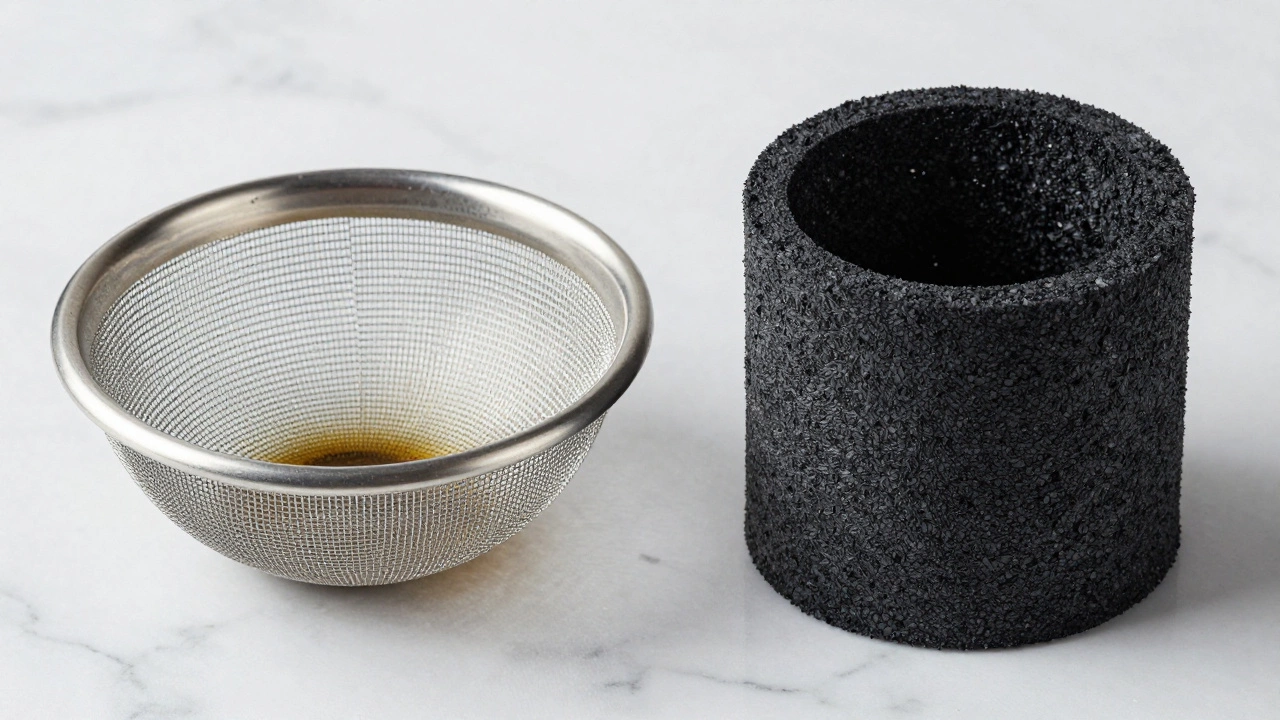
Before you assume the motor is dead, look at the filters. A Grease Filter is a removable mesh or aluminum panel designed to trap airborne fat and oils before they enter the ductwork. When these get clogged, the motor might sound like it's screaming, but no air is moving through.
Pop the filters out and run the fan again. Does the suction suddenly improve? If so, your fan isn't broken; it's just dirty. Most aluminum mesh filters can be cleaned with a degreaser and hot water. If you have Charcoal Filters, which are used in recirculating fans to scrub odors, keep in mind that these cannot be washed. They must be replaced every 3 to 6 months depending on how much you fry food.
| Filter Type | Primary Function | Maintenance Action | Typical Lifespan |
|---|---|---|---|
| Aluminum Mesh | Traps grease/oil | Wash with soap/degreaser | Permanent (if cleaned) |
| Baffle Filter | Commercial-grade grease trap | Dishwasher safe | Permanent |
| Charcoal/Carbon | Removes smells | Complete replacement | 3-6 Months |
Diagnosing Electrical and Motor Issues
If the paper test failed and the filters are clean, you need to investigate the Electric Motor. This is the heart of the unit that converts electrical energy into mechanical rotation to drive the fan blades. Start by listening closely. A loud humming sound without any rotation often points to a failed Start Capacitor, which is the component that gives the motor the initial kick to start spinning. If the motor is silent, you might have a blown fuse or a faulty switch.
For those comfortable with a Multimeter, which is a tool used to measure voltage, current, and resistance, you can check if power is actually reaching the motor. Turn off the breaker first. Once the cover is off, check for continuity in the wiring. If the multimeter shows 0 ohms across the motor windings, the motor is shorted and needs a total replacement. If it's getting power but not spinning, the bearings might be seized from years of accumulated grease.
Inspecting the External Vent and Damper
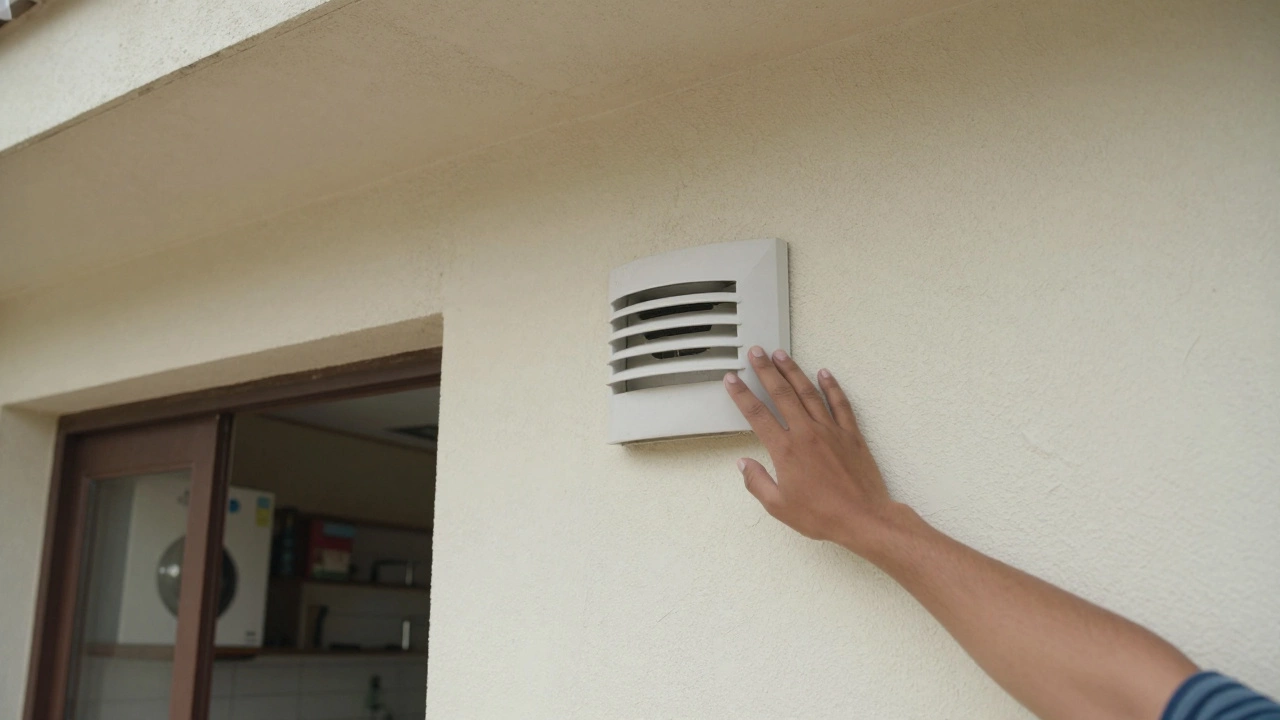
Sometimes the fan is spinning perfectly, but the air has nowhere to go. This usually happens at the Backdraft Damper, a one-way flap that prevents outside air from blowing back into your kitchen. If this flap gets stuck shut due to rust or grease, your fan is just pushing air against a wall.
Go outside and locate the external vent wall cap. While someone else turns the fan on inside, feel the vent. You should feel a strong stream of air pushing out. If you feel nothing, there is a blockage in the Ductwork, the series of pipes that transport air from the hood to the outside. This could be as simple as a bird's nest in the vent or as complex as a crushed flexible duct in the attic. If you see grease dripping from the external vent, it's a sign that your internal filters have been failing for a long time.
When to Call a Pro vs. DIY
Testing is the easy part; fixing it depends on the failure. If the problem is a dirty filter or a stuck damper, you can handle that with a screwdriver and some soap. However, if you're dealing with Wiring issues or a burnt-out motor, it's time to call in an expert. Dealing with 120V or 240V electricity inside a greasy metal box is a recipe for disaster if you aren't trained.
A professional technician will use a Anemometer to measure the exact Cubic Feet per Minute (CFM) of air being moved. This tells them if the fan is operating at its rated capacity or if the entire system is undersized for your kitchen layout. If your fan is more than 15 years old, replacing the motor might be a waste of money compared to installing a modern, high-efficiency unit.
Why does my extractor fan make a loud noise but not suck any air?
This is usually caused by one of three things: heavily clogged grease filters, a detached fan blade (where the motor spins but the blade doesn't), or a blocked external vent. Start by removing the filters and seeing if the suction improves; if it doesn't, check the ducting for obstructions.
How often should I test my kitchen vent?
It's a good habit to do the "paper test" once a month, especially if you cook with oil frequently. This ensures that grease isn't building up in the ducts, which can become a fire hazard over time.
Can I use a vacuum cleaner to clean the ducts?
While you can vacuum the intake area, a standard home vacuum isn't powerful enough to clear grease from long runs of ductwork. For deep cleaning, a professional duct cleaning service uses high-pressure air and rotating brushes to scrub the interior walls of the pipe.
What is the difference between recirculating and vented fans?
Vented fans push air through a duct to the outside of the house. Recirculating fans pull air through a grease filter and then a charcoal filter to remove odors before blowing the air back into the kitchen. Recirculating fans are harder to test via the "outside vent" method because there is no external exit.
Is it normal for the fan to vibrate during the test?
Slight vibration is normal, but heavy shaking usually indicates an unbalanced fan blade. This happens if grease has accumulated unevenly on the blades or if a blade is slightly bent, which can eventually wear out the motor bearings.