Freezer Repair vs. Replacement Calculator
Enter your specific details below to apply the industry-standard "50% Rule" and factor in age and energy costs.
You’re standing in the kitchen, staring at a puddle of water on the floor or listening to that terrifying grinding noise coming from under the fridge. Your mind instantly jumps to the worst-case scenario: "Do I have to buy a new freezer?" It’s a stressful thought, especially when you realize how much money is tied up in your appliances. But here is the truth most technicians won’t tell you upfront: half the time, you don't need to panic. You just need to do some quick math.
Deciding whether to repair or replace a freezer isn't about guessing; it's about comparing two specific numbers against the value of the machine itself. If you know these numbers, you can make a decision in five minutes that saves you hundreds of dollars. Let’s break down exactly how to calculate this, what costs are involved, and when walking away from a repair is actually the smarter financial move.
The Golden Rule: The 50% Threshold
There is a widely accepted heuristic in the appliance industry known as the "50% Rule." It’s simple, brutal, and effective. Here is how it works: if the cost to repair your freezer is more than 50% of the price of a brand-new equivalent model, you should replace it. If it’s less, you repair it.
Why does this rule exist? Because appliances depreciate. A freezer bought three years ago has lost value. Spending $400 to fix a unit worth $300 in resale terms is throwing money into a hole. Conversely, spending $150 to fix a $600 machine keeps its remaining lifespan intact for a fraction of the cost of a new one.
But wait-there is a catch. This rule only applies if the freezer is relatively young. If your unit is over 10-15 years old, even a cheap repair might not be worth it because other components are likely nearing failure. We’ll get into age factors later, but for now, keep the 50% threshold in mind as your primary filter.
Breaking Down the Costs: What Are You Actually Paying For?
To use the 50% rule, you need accurate numbers. Many homeowners underestimate repair costs because they forget labor. Appliance repair isn't like changing a lightbulb; it requires specialized tools, refrigerant handling certifications, and diagnostic time.
| Item | Low Estimate | High Estimate | Notes |
|---|---|---|---|
| Service Call / Diagnostic Fee | $75 | $150 | Often waived if you proceed with repair. |
| Thermostat Replacement | $150 | $300 | Common issue for units not cooling properly. |
| Defrost Timer/Control Board | $200 | $400 | Fixes ice buildup issues. |
| Evaporator Fan Motor | $250 | $450 | Noise reduction and airflow restoration. |
| Compressor Replacement | $600 | $1,200+ | The heart of the system. Usually triggers replacement. |
| New Chest Freezer (5 cu ft) | $300 | $500 | Basic models, lower energy efficiency. |
| New Upright Freezer (18 cu ft) | $800 | $1,500 | Energy Star models cost more upfront. |
As you can see, small repairs like fixing a door seal or replacing a fan motor often fall well below the 50% mark for mid-range freezers. However, major component failures like the compressor almost always exceed it. This is why diagnosing the problem accurately before getting a quote is crucial.
The Age Factor: When Time Is Against You
Age changes everything. According to data from the Association of Home Appliance Manufacturers, the average lifespan of a modern freezer is between 10 and 15 years. Older models, particularly those manufactured before 2010, could last closer to 20 years due to simpler mechanical designs.
If your freezer is under 7 years old, you are almost always better off repairing it unless the compressor is dead. The remaining lifespan is long enough to justify the investment. Think of it like fixing a car that has 50,000 miles on it versus one with 200,000 miles.
However, if your unit is over 12 years old, the calculus shifts. At this stage, you are dealing with wear and tear on multiple systems simultaneously. Replacing the thermostat today might mean the condenser fan fails next month. In this scenario, even a repair costing 30% of a new unit’s price might be a bad bet because you’ll likely face another bill within six months. Replacement offers peace of mind and a fresh warranty period.
Energy Efficiency: The Hidden Cost of Keeping Old Tech
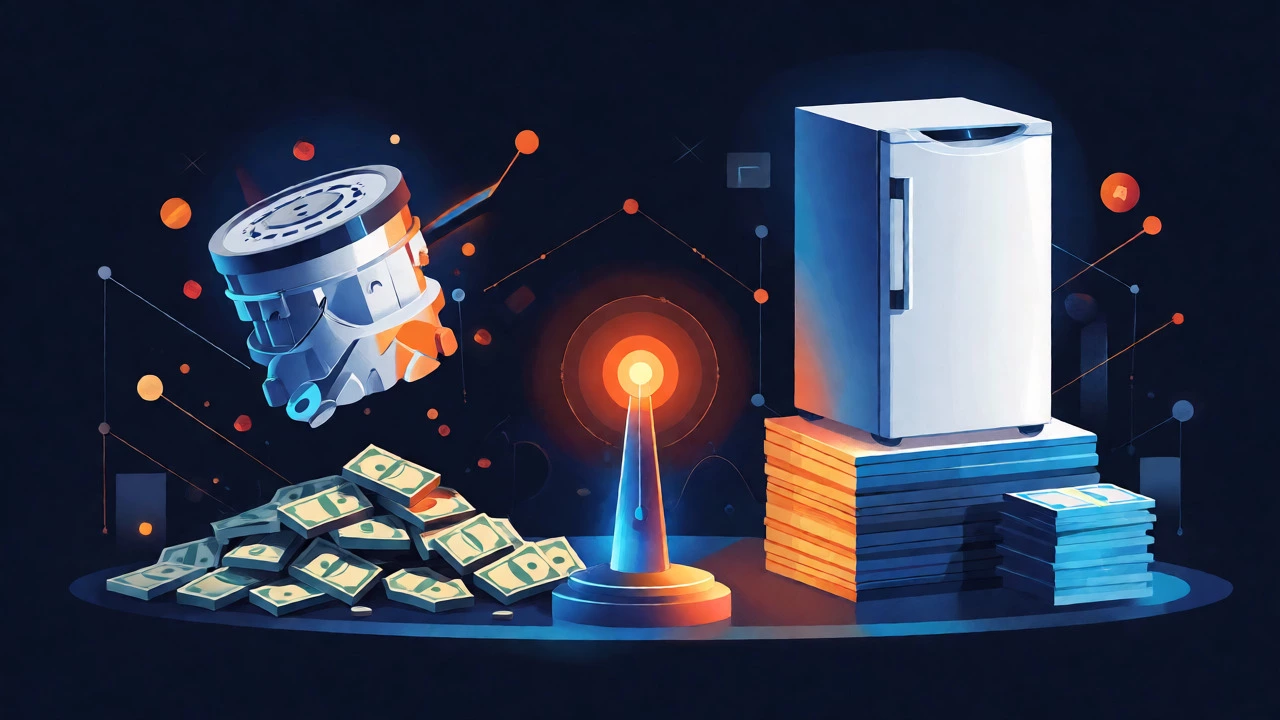
This is where many people lose money without realizing it. Refrigeration technology has improved significantly in the last decade. Modern compressors and insulation materials allow new freezers to consume 30-50% less electricity than models made 15 years ago.
Let’s look at a concrete example. An older 15-cubic-foot upright freezer might consume 600 kWh per year. At current Canadian residential rates (averaging around $0.14-$0.16 per kWh depending on province), that costs you roughly $90-$100 annually. A new Energy Star certified model of the same size might consume only 350 kWh, costing around $55-$60 a year.
The difference is about $40 a year. Over the 10-year life of a new freezer, that’s $400 in savings. While this doesn’t immediately pay for the purchase, it offsets the cost of ownership. If your old freezer is already struggling to maintain temperature, it’s working harder and using even more power, making the case for replacement stronger.
Parts Availability: The Obsolescence Trap
Manufacturers typically guarantee parts availability for seven to ten years after a model is discontinued. After that, finding a specific control board or door gasket becomes a treasure hunt. You might find them on third-party sites, but prices skyrocket, and shipping takes weeks.
If you have an obscure brand or a very old model, check part availability before calling a technician. Sometimes, the diagnosis is correct, but the part simply doesn’t exist anymore. In these cases, replacement isn’t just cheaper-it’s the only option. Don’t let a technician spend two hours trying to cannibalize an old part; ask them upfront if the specific component is still in stock.
When to Definitely Replace (And When Not To)
To simplify your decision-making process, here is a quick checklist based on real-world scenarios I’ve seen in Hamilton homes.
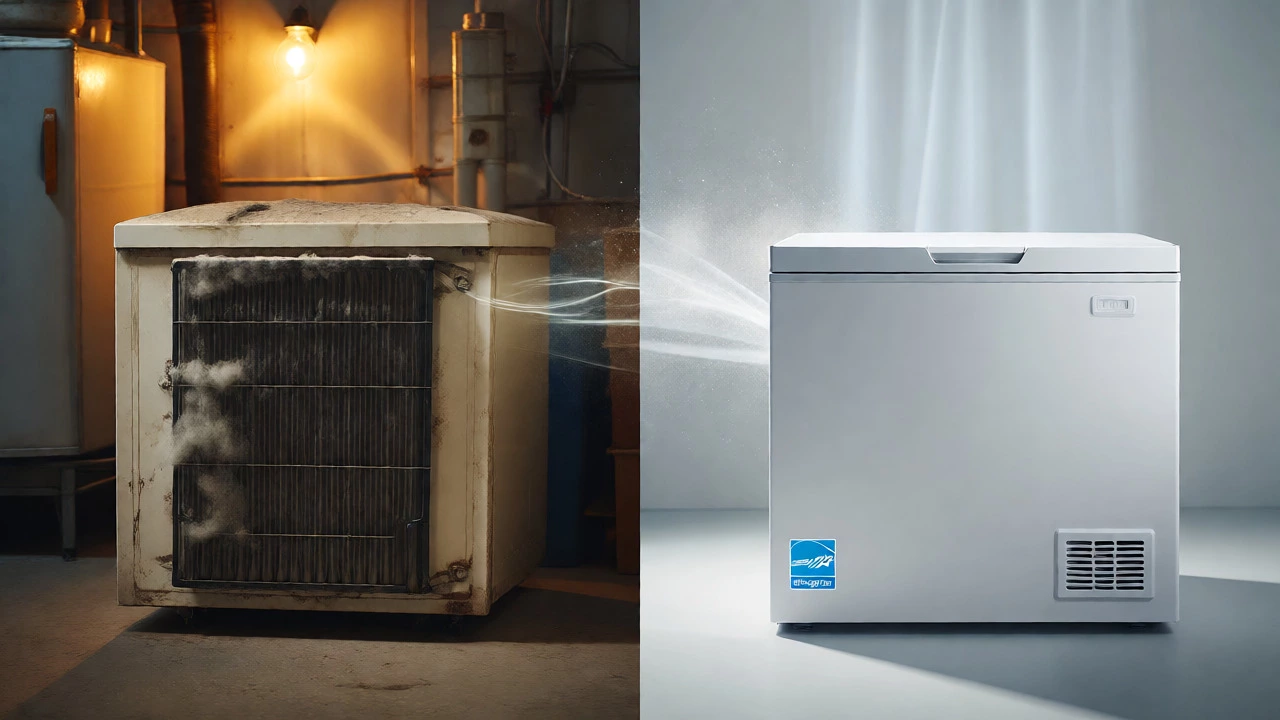
- Replace if: The compressor has failed. This is the engine of the freezer. Replacing it is labor-intensive and expensive ($600+). Unless you have a high-end commercial unit, it’s rarely worth it.
- Replace if: The cabinet is rusted through or the insulation is compromised. If cold air leaks out constantly, no amount of part replacement will fix the core inefficiency.
- Repair if: The issue is the defrost heater, timer, or thermostat. These are relatively inexpensive parts ($50-$150) and standard labor rates apply. Total cost usually stays under $300.
- Repair if: The door gasket is torn. A new gasket costs $50-$100 and takes 30 minutes to install. This fixes cooling issues caused by warm air intrusion.
- Consider Repair if: You have a built-in freezer integrated into cabinetry. Removing and installing a built-in unit involves carpentry and potential countertop adjustments, which can add $500-$1,000 to the replacement cost. Often, keeping the existing shell and replacing internal components makes sense.
DIY Checks Before Calling a Pro
Before you spend $100 on a service call, do these three checks. They solve about 20% of reported "broken" freezers.
- Clean the Condenser Coils: Dust and pet hair accumulate on the coils (usually at the back or bottom front). This forces the compressor to work harder. Vacuum them gently. If the freezer starts cooling again, you saved yourself a repair.
- Check the Door Seal: Close the door on a piece of paper. If you can pull the paper out easily, the seal is broken. Warm air is getting in, causing ice buildup and poor cooling. Replace the gasket.
- Ensure Proper Ventilation: Does the freezer have room to breathe? If it’s crammed tight against walls or cabinets, heat can’t escape. Pull it out a few inches. Sometimes, overheating causes shutdowns.
Frequently Asked Questions
How long do freezers typically last?
The average lifespan of a household freezer is between 10 and 15 years. Chest freezers often last longer than upright models because they have fewer moving parts and retain cold air better when opened. High-end brands like Sub-Zero may last 20+ years with proper maintenance.
Is it worth repairing a 15-year-old freezer?
Generally, no. At 15 years, the unit is near the end of its expected life. Even minor repairs are risky investments because other components are likely to fail soon. Additionally, newer models are significantly more energy-efficient, offering operational savings that help offset the purchase price.
What is the most expensive freezer repair?
Replacing the compressor is the most costly repair, typically ranging from $600 to $1,200 including labor. This is because the compressor must be welded, the system evacuated, and recharged with refrigerant. For most residential units, this cost exceeds 50% of a new unit's price, making replacement the better option.
Can I negotiate the repair cost?
Yes, especially if you obtain multiple quotes. Also, ask if the diagnostic fee is waived upon repair completion. Some companies offer discounts for seniors or military personnel. Always get a written estimate that includes both parts and labor before authorizing work.
Does buying a new freezer save money on bills?
Yes, modern Energy Star certified freezers use 30-50% less energy than models from 15 years ago. Depending on your local electricity rates, this can save you $30-$60 per year. Over a decade, these savings can contribute significantly to paying for the new appliance.