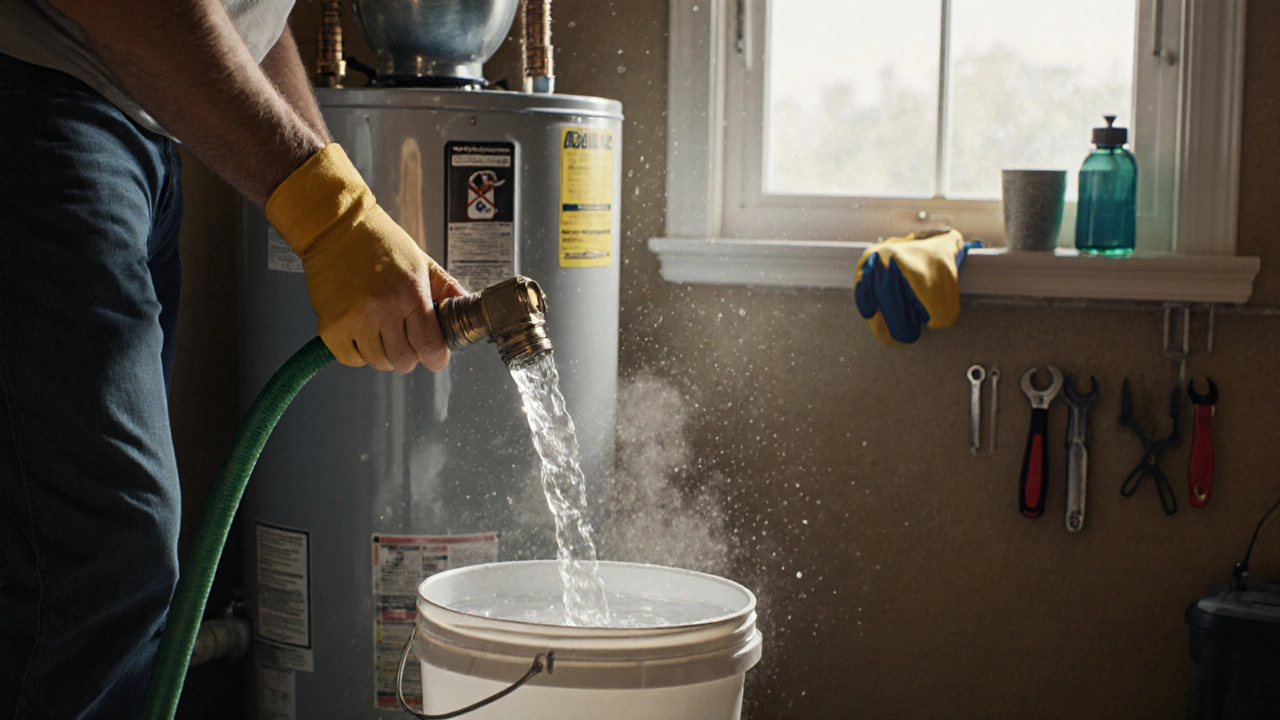
Flushing your water heater removes harmful sediment that reduces efficiency and shortens its lifespan. Learn why flushing beats simple draining and how to do it yourself to save money and avoid sudden failures.
Water Heater Flushing: Why It Matters and How to Do It Right
When you turn on the tap and get lukewarm water instead of a strong stream of hot water, the problem isn’t always a broken element—it’s often water heater flushing, the process of removing built-up sediment inside the tank to restore efficiency and prevent damage. Also known as tank flushing, it’s one of the most overlooked but essential tasks for any home with a tank-style water heater. Most people don’t realize that every time your heater runs, tiny minerals in the water settle at the bottom. Over time, this turns into a thick layer of sediment buildup, a dense layer of calcium, magnesium, and other minerals that collect at the bottom of the tank. That layer doesn’t just sit there—it acts like insulation, forcing your heater to work twice as hard just to warm the water above it. That means higher bills, slower recovery times, and a heater that dies years earlier than it should.
Flushing your water heater isn’t just about fixing slow hot water—it’s about stopping a slow-motion breakdown. If you skip this step, the sediment can cause the lower heating element to overheat and burn out, trigger the high-limit switch to trip constantly, or even crack the tank lining from overheating. You’ll see symptoms like popping noises, rusty water, or no hot water at all—problems that show up in posts like Why Did My Hot Water Stop Working All of a Sudden? and How to Tell If Your Water Heater Element Is Bad. These aren’t random failures. They’re the result of neglecting basic maintenance. And while you can replace a broken element, you can’t fix a cracked tank. That’s when you’re stuck paying for a whole new unit—often $1,000 or more.
Most manufacturers recommend flushing your water heater at least once a year. If you live in an area with hard water, do it every six months. It takes less than an hour, needs no special tools, and saves you hundreds in energy and repair costs. The process is simple: turn off the power or gas, connect a hose to the drain valve, and let the water run until it comes out clear. No need to call a pro unless you’re uncomfortable handling water or gas lines. And if you’re unsure whether your heater even has a drain valve, check the bottom of the tank—it’s usually a small spigot near the floor. Many homeowners don’t even know it’s there.
Flushing isn’t just a repair—it’s insurance. It keeps your heater running smoothly, cuts energy waste, and gives you more hot water when you need it. And if you’re wondering whether your 10-year-old or 20-year-old heater is worth saving, flushing might be the one thing that buys you another year or two. But if you’ve been ignoring it for years, don’t wait for the tank to burst. Start now. The posts below show you exactly how to do it safely, how to spot signs you’ve waited too long, and when it’s time to walk away and replace it instead.