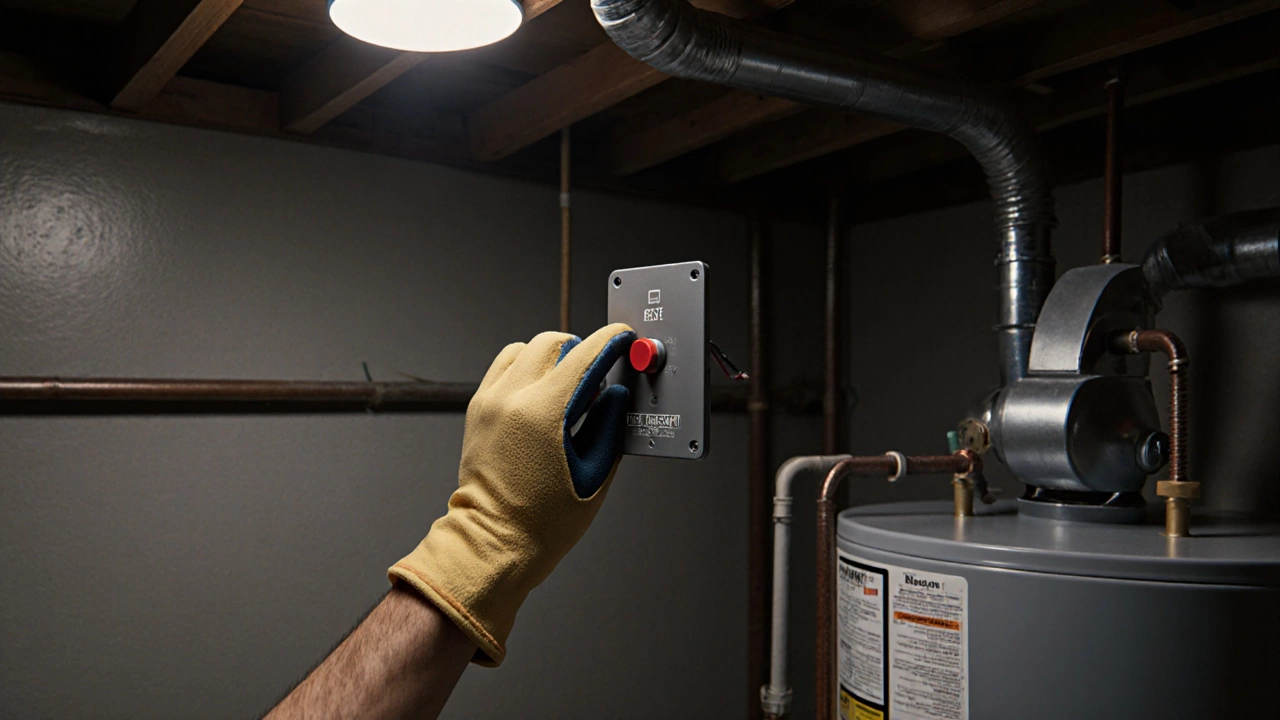
Learn how to safely reset a hot water heater when it stops producing hot water. Step-by-step guide for electric and gas models, including troubleshooting, maintenance tips, and when to replace your unit.
Electric Water Heater Reset: Why It Trips and How to Fix It
When your electric water heater reset, a safety feature designed to shut off power when the tank overheats. Also known as the high limit switch, it’s not meant to be pushed repeatedly—it’s a warning. If you’re resetting it over and over, you’re not fixing the problem. You’re just delaying it.
The reset button trips because something inside your water heater is overheating. The most common cause? A faulty thermostat, a component that controls the temperature and can stick in the "on" position. When that happens, the heating elements keep running even after the water reaches the right temp. That’s when the reset button kicks in to prevent a fire. Another big culprit is sediment buildup, mineral deposits that collect at the bottom of the tank and trap heat around the element. That trapped heat makes the element overwork, and the reset button shuts it down. And if your heating element is failing or shorting out, it can also cause the same issue.
Resetting the button once is fine—if the water heats up and stays hot, you might’ve gotten lucky. But if it trips again within a day or two, you’ve got a real problem. A bad thermostat doesn’t fix itself. Sediment won’t magically disappear. And a damaged element won’t heal. Ignoring it doesn’t save money—it just leads to a full breakdown, maybe even a leak. Most people don’t realize that a tripping reset button is often the last warning before your water heater dies.
Before you call a technician, check the basics: Is the circuit breaker tripped? Are the wires loose? Is the tank full of water? Sometimes, it’s as simple as a loose connection. But if everything looks fine and the reset button still pops, you’re looking at a component failure. The good news? These are fixable. The bad news? You need to know which part to replace. That’s where the posts below come in. You’ll find step-by-step guides on testing your thermostat, flushing out sediment, checking your heating elements, and deciding whether to repair or replace. No guesswork. No fluff. Just what actually works.