Ever heard that loud click from your water heater and noticed the hot water suddenly stops? You might’ve been told to just press the reset button. But is that really safe? Or are you risking a fire, a burst tank, or worse? The answer isn’t simple. Pressing the reset button once-under the right conditions-is fine. Doing it repeatedly? That’s a red flag.
What the reset button actually does
The reset button on your water heater isn’t a power switch. It’s a safety device. Officially called a high-limit switch, it cuts power when the water inside gets dangerously hot-usually above 180°F (82°C). This isn’t about comfort; it’s about preventing scalding or even boiling over in extreme cases.
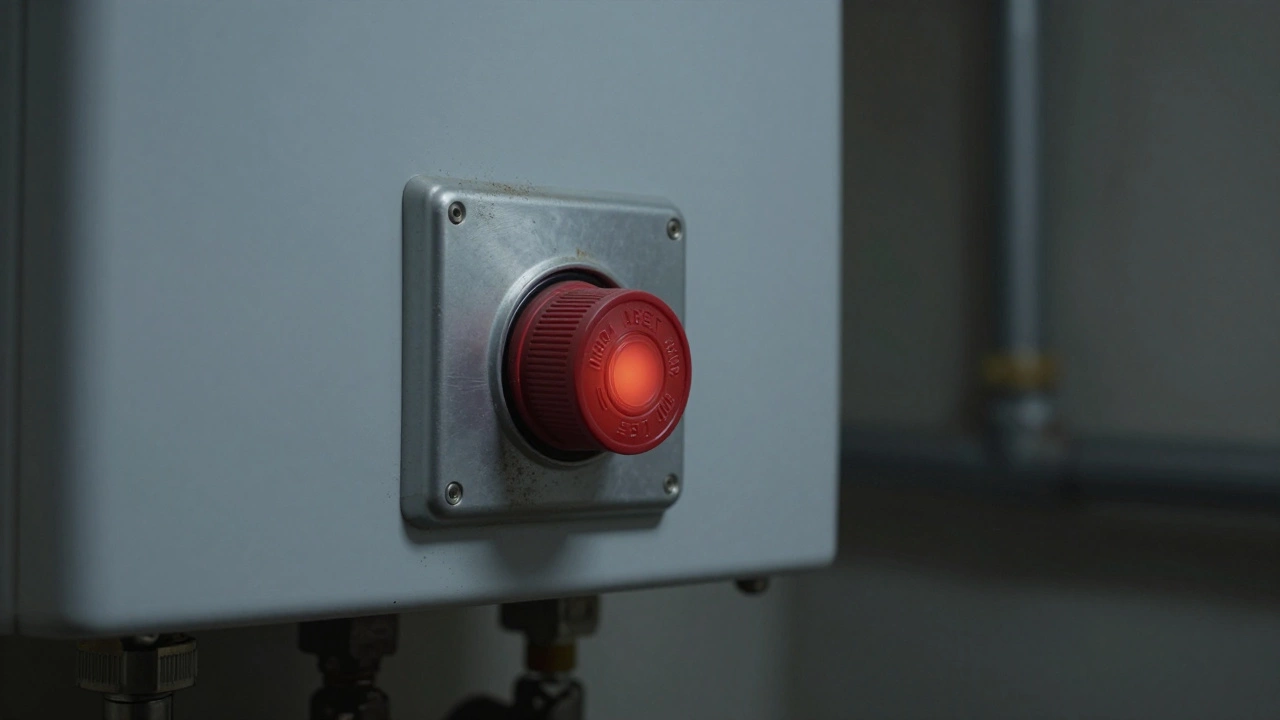
Most electric water heaters have this button on the thermostat, usually hidden behind a metal panel near the top. It’s red, often labeled "Reset," and pops out when triggered. Gas water heaters don’t usually have one-instead, they rely on a flammable gas safety shutoff.
When the reset button pops out, it means something went wrong. Maybe the thermostat failed and kept heating. Maybe the heating element shorted. Or maybe sediment built up, trapping heat near the bottom. The reset button is the system’s last line of defense.
When it’s okay to press the reset button
It’s safe to press the reset button once if:
- You’ve just turned the water heater back on after a power outage
- The water was briefly off, and the tank cooled down completely
- You’ve ruled out obvious causes like a tripped circuit breaker or a blown fuse
In those cases, the reset button might’ve popped because the system was restarting and briefly overheated during the initial ramp-up. That’s normal. Press it gently. Wait 30 minutes. If hot water returns, you’re probably fine.
But here’s the catch: if the water heater resets and then trips again within hours or days? That’s not normal. That’s a warning.
Why pressing it repeatedly is dangerous
Pressing the reset button over and over is like ignoring a car’s check engine light and just turning it off. You’re not fixing the problem-you’re hiding it.
Here’s what’s really happening when the reset button keeps popping:
- Thermostat failure: If the thermostat is stuck in "on" mode, it keeps sending power to the heating elements-even when the water is already boiling. Pressing reset just gives it another chance to overheat.
- Faulty heating element: A shorted element can draw too much current, overheating the tank. The reset button trips to stop a fire.
- Mineral buildup: In hard water areas like Hamilton, sediment collects at the bottom of the tank. That sludge traps heat, causing localized boiling. The thermostat can’t read the real water temp, so it keeps heating until the reset trips.
- Wiring issues: Loose or corroded wires can cause arcing and overheating. This isn’t something you can fix by pushing a button.
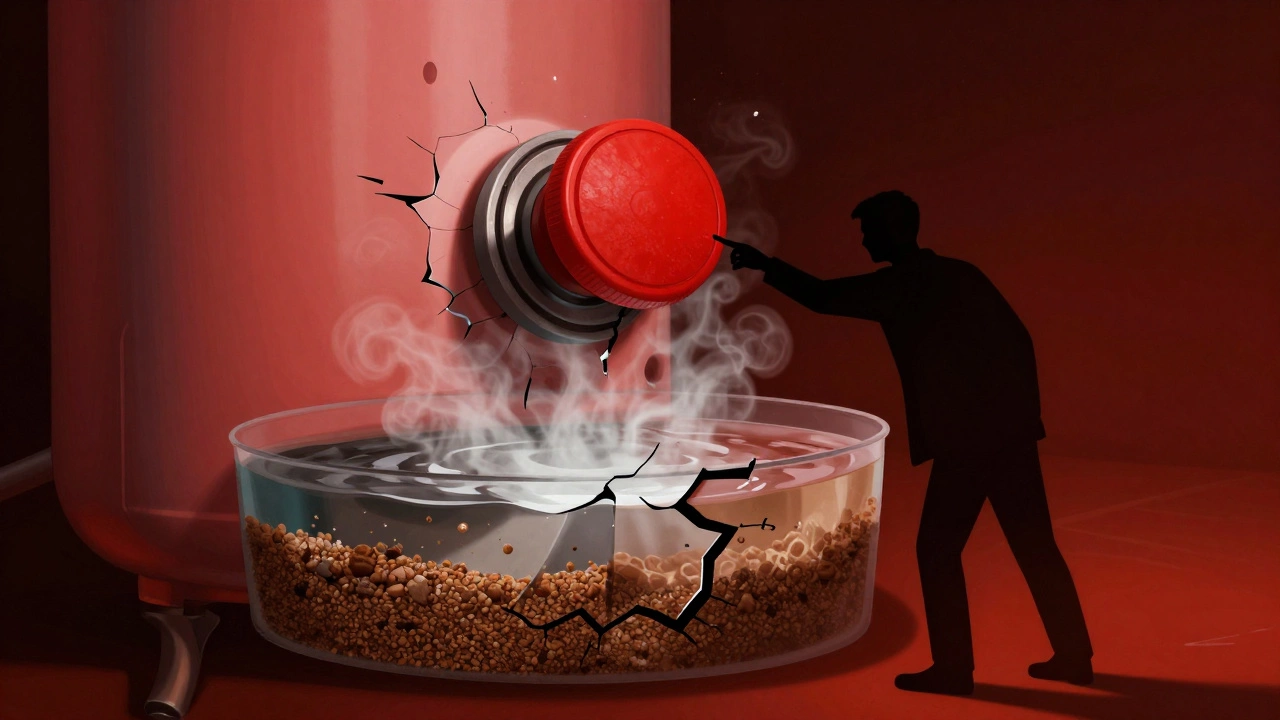
Every time you reset the heater without fixing the root cause, you’re putting stress on the tank. Over time, that can crack the inner lining, lead to leaks, or worse-cause the tank to rupture under pressure.
What to do instead of pressing reset
If the reset button pops once and stays in? Fine. But if it pops again, follow these steps:
- Turn off the power. Flip the circuit breaker for the water heater. Don’t just rely on the reset button being out.
- Check the temperature setting. Turn the thermostat down to 120°F (49°C). Most homes don’t need hotter than that. Higher settings increase risk and energy bills.
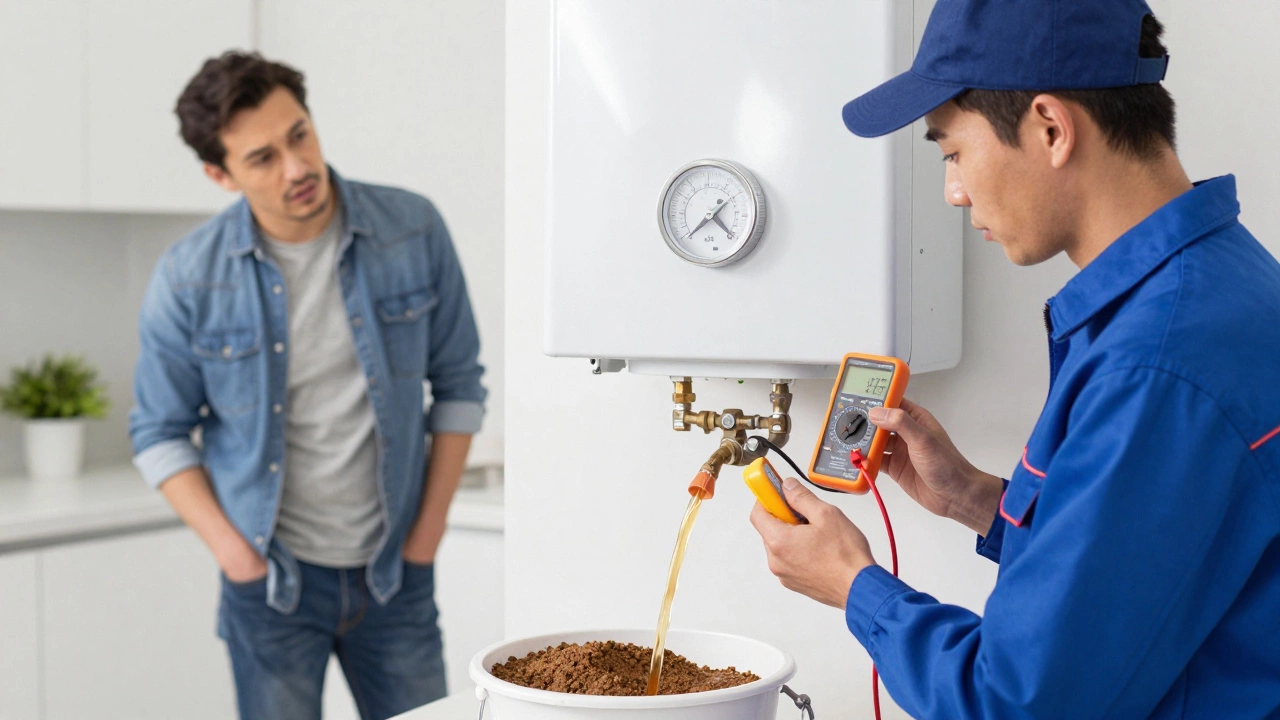
- Drain a few gallons. Attach a hose to the drain valve at the bottom and let out 2-3 gallons. If you see gritty, brown water? That’s sediment. Flush the tank every 6-12 months if you have hard water.
- Test the thermostat. Use a multimeter to check if the thermostat is sending power when it shouldn’t. If you’re not comfortable with this, skip to step 5.
- Call a pro. If the reset button keeps popping, don’t guess. A licensed plumber can test the elements, check the pressure relief valve, inspect the wiring, and diagnose the real issue.
Replacing a faulty thermostat or heating element costs $150-$300. Replacing a burst water heater? That’s $1,200-$2,500. The math is simple.
Signs your water heater needs replacement
Even if you fix the reset issue, some signs mean it’s time to replace the whole unit:
- Water heater is over 10 years old
- You hear popping or rumbling sounds (that’s sediment boiling)
- Water is rusty or smells like rotten eggs
- Leaking from the bottom or around fittings
- It takes forever to heat up, even after resetting
Modern water heaters are 20-30% more efficient than models from 10 years ago. If yours is old and constantly tripping, replacement isn’t just safer-it’s cheaper in the long run.
Preventing reset trips in the future
Here’s how to keep your water heater running smoothly:
- Flush the tank every 6-12 months (especially in Hamilton’s hard water areas)
- Set the thermostat to 120°F-no higher
- Install a water softener if you have hard water
- Check the pressure relief valve yearly-lift the lever to make sure water flows out
- Don’t ignore strange noises or smells
These simple habits can double the life of your water heater and prevent most reset button trips before they happen.
What to do if the reset button won’t stay in
Some people try to tape or wedge the reset button down so it doesn’t pop out. Don’t. That’s a fire hazard.
If the button won’t stay in after you press it, the internal mechanism is damaged. The switch is broken. Continuing to use the heater means you’ve disabled the safety system entirely.
Turn off the power. Don’t touch it. Call a professional immediately.
Water heaters don’t explode like in movies. But they can rupture under pressure, sending scalding water and shards of metal through your basement. That’s not a repair job. That’s a disaster.
Can I press the reset button on my water heater if it’s cold?
Yes, if the water heater was turned off and the tank cooled down, it’s normal for the reset button to pop. Pressing it once to restart is safe. But if it pops again after restarting, there’s a problem that needs fixing.
Why does my water heater reset button keep popping?
It keeps popping because something is causing the water to overheat. Common causes include a faulty thermostat, a shorted heating element, heavy mineral buildup, or wiring issues. Pressing the button repeatedly won’t fix this-it makes the problem worse.
Is it safe to leave the reset button popped out?
Yes, it’s safe to leave it popped out. The water heater won’t heat until you press it back in. But leaving it popped means you have no hot water. Don’t ignore it-figure out why it tripped and fix the cause.
How often should I flush my water heater?
Flush your water heater every 6 to 12 months if you live in an area with hard water, like Hamilton. Sediment buildup is the #1 cause of overheating and reset button trips. Flushing removes the sludge that traps heat and wears out your tank.
Can a tripped reset button cause a leak?
Not directly. But if the reset button keeps tripping because of overheating, the constant pressure and stress on the tank can crack the inner lining over time. That’s when leaks start. So yes-a recurring reset issue can lead to a leak.
Final advice: Don’t guess. Test it.
Water heaters are one of the most dangerous appliances in your home. They hold 40-80 gallons of scalding water under pressure. A small mistake can turn into a flood-or worse.
Pressing the reset button once? Fine. Pressing it five times in a week? That’s not a fix. That’s a warning sign you’re ignoring.
If you’re unsure, call a licensed plumber. They’ll check the thermostat, test the elements, inspect the pressure valve, and tell you if you’re one bad reset away from a major repair-or a total replacement.
It’s not expensive to get it checked. It’s expensive to wait until your basement is underwater.