Appliance or Electronic Device Classifier
Device Classification Quiz
Test your understanding of the article's key distinctions between appliances and electronic devices. Answer the following questions to determine if your device is classified as an appliance or electronic device.
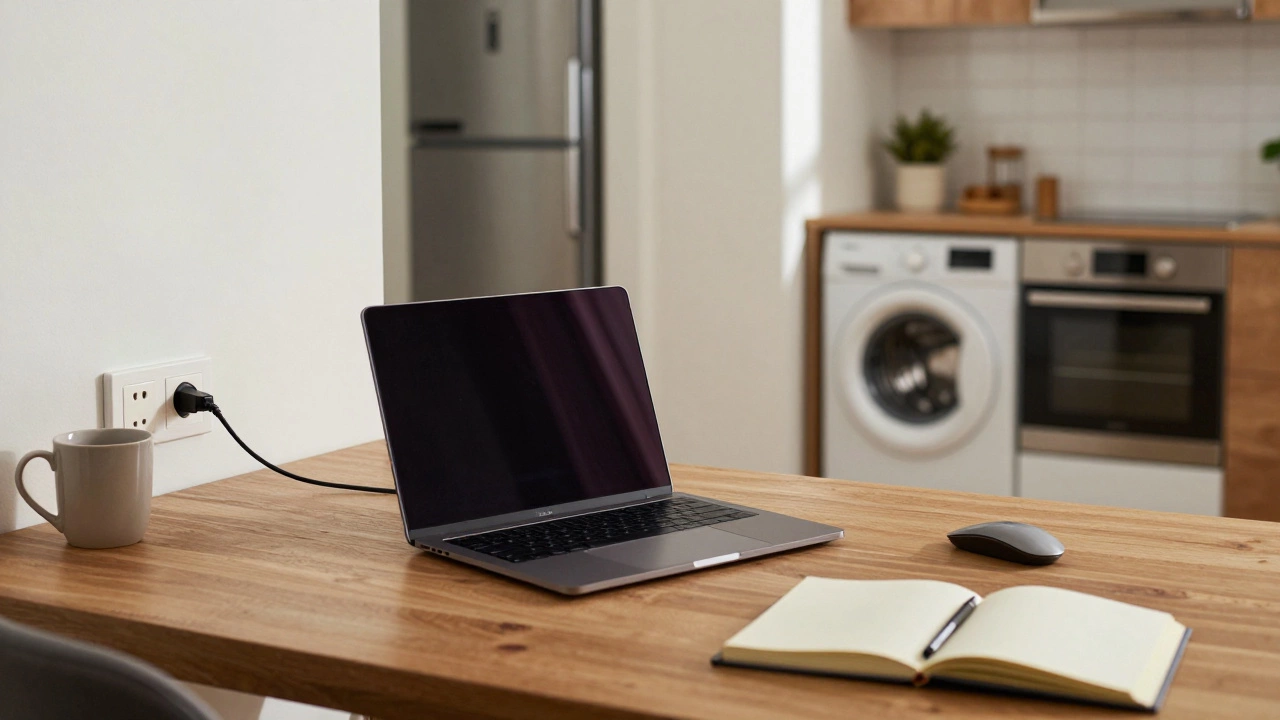
When you hear the word appliance, what comes to mind? Probably the fridge humming in the kitchen, the washing machine rattling through a cycle, or the oven warming up for dinner. But what about your laptop? Is it an appliance too? It plugs in. It does a job around the house. It’s something you use daily. So why don’t we treat it like a toaster or a vacuum cleaner?
What Exactly Makes Something an Appliance?
The word "appliance" doesn’t just mean anything that runs on electricity. It’s more specific than that. In home services and repair industries, an appliance is a device designed to perform a routine household task-usually one tied to comfort, cleaning, food prep, or climate control. Think: cooking, cooling, washing, heating, or drying. These are tasks that happen in fixed locations: the kitchen, the laundry room, the bathroom.
Laptops, phones, tablets, and smart TVs don’t fit that mold. They’re electronic devices, not appliances. The difference isn’t just semantics-it affects how they’re repaired, maintained, and even regulated. For example, when your fridge stops cooling, a technician checks the compressor, refrigerant levels, and door seals. When your laptop crashes, you’re looking at software glitches, overheating from dust-clogged fans, or a failing SSD. Different tools. Different skills. Different parts.
Why the Confusion?
It’s easy to mix them up because modern electronics do more than ever. Your laptop can stream movies, play music, control your smart thermostat, and even run a home security system. It feels like it’s doing "appliance-like" work. But function doesn’t equal category. A Swiss Army knife can cut, open bottles, and screw things in-but you wouldn’t call it a kitchen utensil, a screwdriver, and a bottle opener all at once. It’s still a multi-tool.
Similarly, your laptop is a multi-purpose computing device. It’s not built to clean your floors, chill your milk, or wash your clothes. Even though it’s plugged into the wall, it doesn’t perform a fixed, repetitive domestic task the way a dishwasher or microwave does. It’s a tool for information, communication, and creativity-not for managing the physical environment of your home.
How Repair Industries Classify Devices
Look at the categories on this site: Water Heater Repair, Fridge and Freezer Repair, Dishwasher Repair. These are all appliances. They’re large, stationary, and built into the home’s infrastructure. They’re also often covered by home warranties, require certified technicians, and have parts regulated by safety standards like UL or CSA.
Laptops fall under Electronics Repair. That’s because they’re portable, contain microchips and circuit boards, and rely on software as much as hardware. When a laptop fails, you don’t call an appliance technician-you call someone who knows about RAM, BIOS, thermal paste, and battery cycles. The repair process is closer to fixing a smartphone than fixing a washing machine.
Even manufacturers treat them differently. Dell, HP, and Apple don’t list their laptops under "home appliances" in their support portals. They’re grouped with tablets, monitors, and peripherals. Meanwhile, Samsung markets its refrigerators and washing machines under "Appliances," and its laptops under "Consumer Electronics." The distinction is intentional-and clear.
What Happens When You Treat a Laptop Like an Appliance?
There’s a real-world cost to misclassifying electronics. If you assume your laptop is an appliance, you might expect it to last 10-15 years like a refrigerator. It won’t. Most laptops are designed for 3-5 years of daily use. Batteries degrade. Hinges break. Keyboards wear out. These aren’t failures you can fix with a wrench or a refrigerant recharge-they’re planned obsolescence built into the design.
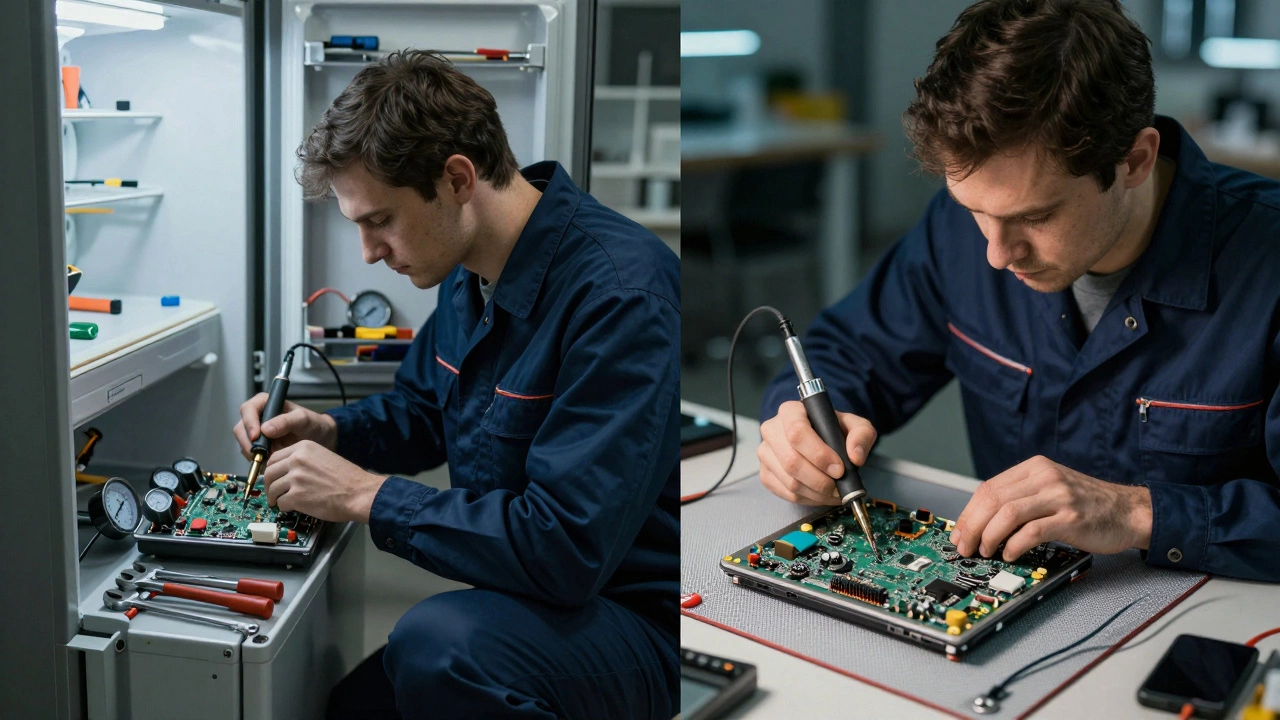
Also, appliance repair shops don’t stock laptop motherboards or SSDs. They don’t have anti-static mats or soldering stations for fine-pitch BGA chips. Trying to get your laptop fixed at a fridge repair shop is like trying to fix a watch with a hammer. You might get lucky, but it’s not the right tool for the job.
And insurance? Homeowners’ policies often cover appliance breakdowns under "scheduled personal property," but laptops usually fall under "electronic equipment"-which may need separate riders or have lower coverage limits.
What About Smart Appliances?
Now here’s where things get fuzzy. Smart fridges with touchscreens, Wi-Fi-enabled ovens, and robot vacuums blur the line. They’re appliances-with electronics inside. So are they both?
Yes. A smart oven is still an appliance first. The touchscreen and app connectivity are add-ons. The core function-baking, broiling, reheating-is unchanged. The electronics support the appliance’s main job. A laptop? Its entire purpose is the electronics. There’s no "core function" outside of computing.
Think of it this way: if you removed the screen, keyboard, and battery from a laptop, you’d have a box of circuit boards with no purpose. If you removed the Wi-Fi module from a smart fridge, you’d still have a fridge. That’s the difference.

So, Is a Laptop an Appliance?
No. A laptop is not an appliance. It’s an electronic device. It belongs in the same category as smartphones, tablets, gaming consoles, and desktop computers. The fact that it plugs into the wall doesn’t make it an appliance. Neither does the fact that you use it every day. Appliances are tools for managing your home’s physical environment. Laptops are tools for managing your digital life.
Understanding this distinction matters if you ever need to get something fixed, file an insurance claim, or decide whether to repair or replace. Don’t waste time calling an appliance technician for your laptop. Find someone who specializes in electronics repair. They’ll know how to test the logic board, replace the thermal pads, and recover your data-without frying the rest of the system.
What Should You Do If Your Laptop Breaks?
If your laptop won’t turn on, runs hot, or freezes constantly, here’s what to do:
- Check if it’s under warranty. Most laptops come with 1-2 years of manufacturer coverage.
- Back up your data immediately if it still boots-even if it’s slow. Use an external drive or cloud storage.
- Don’t try to open it yourself unless you’re trained. Laptop internals are fragile and static-sensitive.
- Search for local electronics repair shops that specialize in your brand (Dell, Lenovo, MacBook, etc.).
- Ask if they use genuine parts and offer a warranty on repairs.
- Compare repair cost to replacement. If it’s over 60% of a new model’s price, replacement is usually smarter.
Most repairs-like battery swaps, fan cleanings, or SSD upgrades-cost between $80 and $200. That’s far less than buying new. But only if you go to the right person.
Final Thought: Labels Matter
Calling a laptop an appliance might sound harmless. But it leads to wrong expectations, wasted time, and costly mistakes. The world of home repair is built on clear categories. Knowing where your devices fit helps you act faster, spend smarter, and avoid being misled.
Your laptop isn’t an appliance. And that’s okay. It’s something better: a personal, portable computer. Treat it like one.
Is a laptop considered an electronic device or an appliance?
A laptop is an electronic device, not an appliance. Appliances are designed for routine household tasks like cooking, cleaning, or cooling-such as refrigerators, washing machines, or ovens. Laptops are portable computing devices meant for information processing, communication, and digital tasks. They’re classified under electronics repair, not appliance repair.
Why don’t appliance repair shops fix laptops?
Appliance repair technicians are trained for large, stationary devices with mechanical or electrical components like compressors, motors, and heating elements. Laptops contain microchips, soldered circuit boards, and complex software systems that require specialized tools and knowledge-like anti-static equipment, micro-soldering stations, and diagnostic software. These skills fall under electronics repair, not appliance repair.
Can a smart TV be considered an appliance?
A smart TV is still classified as an electronic device, not an appliance. Even though it’s plugged in and used daily, its primary function is entertainment and display-not managing the home’s environment. While it has smart features, it doesn’t perform tasks like washing, cooling, or heating. That’s why it’s grouped with laptops and game consoles, not with refrigerators or dishwashers.
Do laptops have the same lifespan as appliances?
No. Most appliances like refrigerators or washing machines last 10-15 years. Laptops typically last 3-5 years under normal use. Their components-especially batteries, SSDs, and cooling systems-degrade faster due to constant portability, heat cycles, and rapid technological upgrades. This shorter lifespan is intentional design, not a defect.
Should I insure my laptop like an appliance?
No. Most homeowners’ insurance policies cover appliances under "scheduled personal property," but laptops are usually categorized as "electronic equipment." This often means lower coverage limits or the need for a separate rider. Check your policy or ask your provider if your laptop is covered under electronics, not appliances. You may need to add it as a scheduled item for full protection.