Water Heater Anode Rod Life Estimator
Your Water Heater Assessment
Key Warning Signs
- No bad smell - Clean water with no sulfur odor
- Clear water - Hot water is free of rust discoloration
- Quiet operation - No popping or rumbling noises
- No leaks - Water heater shows no signs of corrosion
- Rotten egg smell - Sulfur odor in hot water indicates bacteria growth
- Rusty water - Rust-colored water shows tank corrosion
- Loud noises - Popping or cracking from sediment buildup
- Leaking tank - Water dripping from tank body (not just valves)
Your Anode Rod Assessment
If your water heater is making strange noises, your hot water smells like rotten eggs, or you’re seeing rust in your taps, the problem might not be the tank itself-it could be your anode rod. This small, often-overlooked part is the first line of defense against corrosion inside your water heater. When it goes bad, your tank starts to rust from the inside out, and that’s when expensive repairs or full replacements become unavoidable.
What even is an anode rod?
The anode rod is a long metal stick, usually made of magnesium, aluminum, or zinc, that hangs vertically inside your water heater tank. Its job? To attract corrosive elements in the water-like sulfur and minerals-so they eat away at the rod instead of your steel tank. It’s a sacrificial part, designed to die so your tank lives longer. Most manufacturers install one when the water heater is new, and it’s supposed to last 3 to 5 years. But in hard water areas like Hamilton, where minerals are high, it can wear out in as little as 18 months.
Sign #1: Smelly hot water (rotten egg smell)
That unmistakable sulfur smell when you turn on the shower? It’s not just gross-it’s a red flag. This odor comes from sulfate-reducing bacteria that feed on sulfur in the water and produce hydrogen sulfide gas. Normally, the anode rod keeps these bacteria in check. But when the rod is gone, the bacteria thrive. If the smell only shows up in hot water and not cold, your anode rod is likely spent. Aluminum rods are more prone to this than magnesium, but even magnesium rods can fail if they’re worn down or coated in mineral buildup.
Sign #2: Rusty or discolored hot water
When you run the hot tap and see brown, orange, or reddish water, that’s rust. And rust in your hot water means your tank’s inner lining is breaking down. The anode rod was supposed to stop this. If you’re seeing rust after 5+ years of use-or worse, after just 3 years-it’s a sign the rod has given up. Rust doesn’t just stain your towels; it can clog your showerheads, valves, and even damage your dishwasher or washing machine over time.
Sign #3: Loud popping or cracking noises
Water heaters aren’t supposed to sound like a popcorn maker. If you hear popping, crackling, or rumbling noises, especially after the heater has been heating up, sediment has built up at the bottom of the tank. This happens when the anode rod is gone and corrosion starts eating the tank floor. The sediment traps water, which then boils and creates those loud noises. It’s not just annoying-it’s inefficient. Your heater has to work harder, using more energy and shortening its lifespan.
Sign #4: Water heater is leaking from the bottom
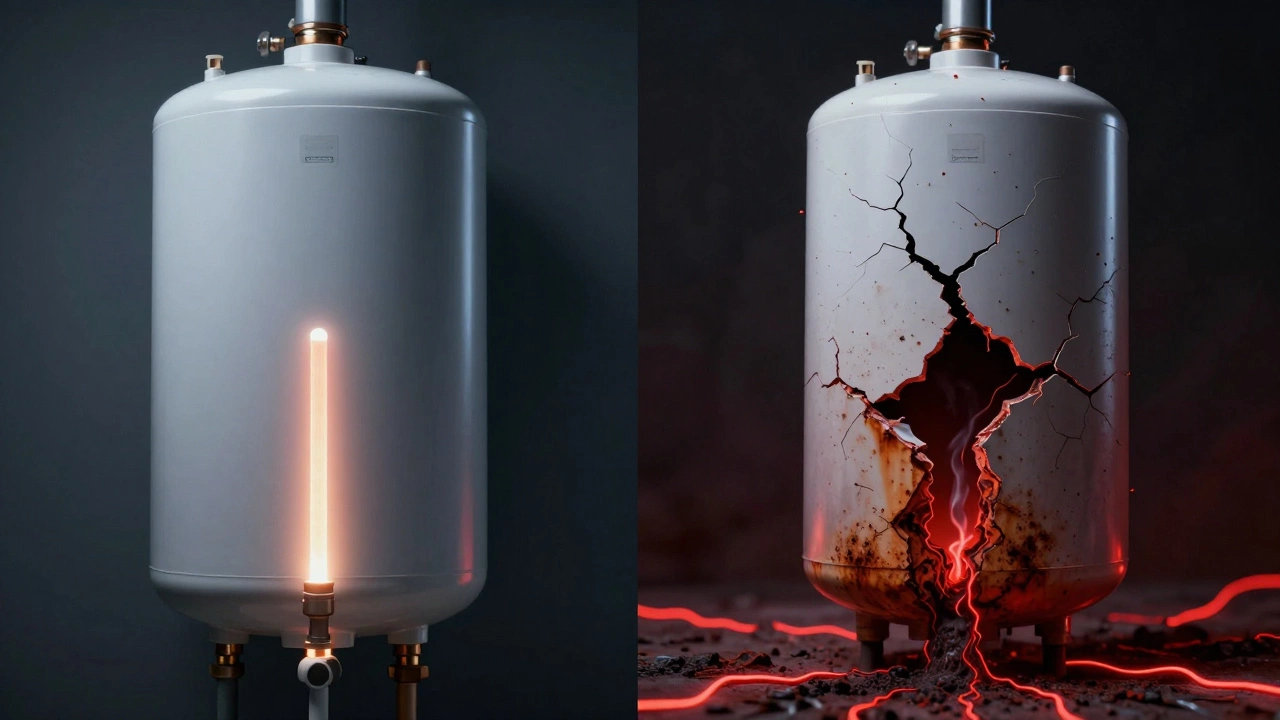
Leaks are scary. But if your water heater is leaking from the bottom near the drain valve or the base of the tank-and you’ve ruled out a faulty valve or loose connection-it’s likely because the tank itself is corroding. Once the anode rod is gone, the tank is exposed to water and minerals. Steel doesn’t last long under those conditions. A leak from the tank body isn’t fixable. You can’t patch a rusted tank. If you’re seeing puddles, your anode rod probably failed years ago.
Sign #5: You haven’t checked it in over 3 years
This one’s simple: if you don’t know when you last inspected your anode rod, it’s probably bad. Most homeowners never look at it. But manufacturers recommend checking it every 1 to 2 years, especially in areas with hard water. In Hamilton, where water hardness averages 180-220 mg/L of calcium carbonate, the rod degrades faster than in softer water regions. If you haven’t touched it since you moved in-or since you bought the heater-it’s time to pull it out and see what’s left.
How to check your anode rod yourself
You don’t need to be a plumber to check it. Here’s how:
- Turn off the power to the water heater. For gas models, turn the thermostat to “pilot.”
- Shut off the cold water supply to the tank.
- Open a hot water tap somewhere in the house to relieve pressure.
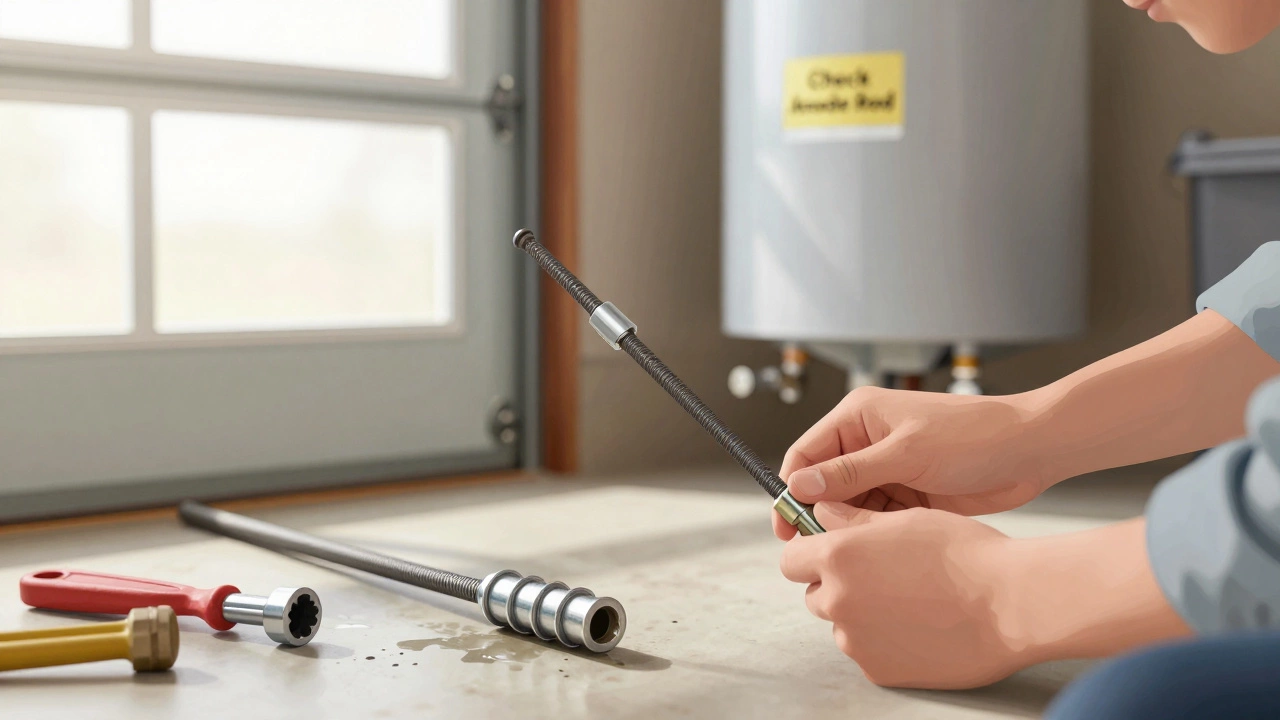
- Locate the anode rod. It’s usually on top of the tank, under a cap labeled “anode” or near the hot water outlet.
- Use a 1-1/16 inch socket wrench to loosen and remove the rod.
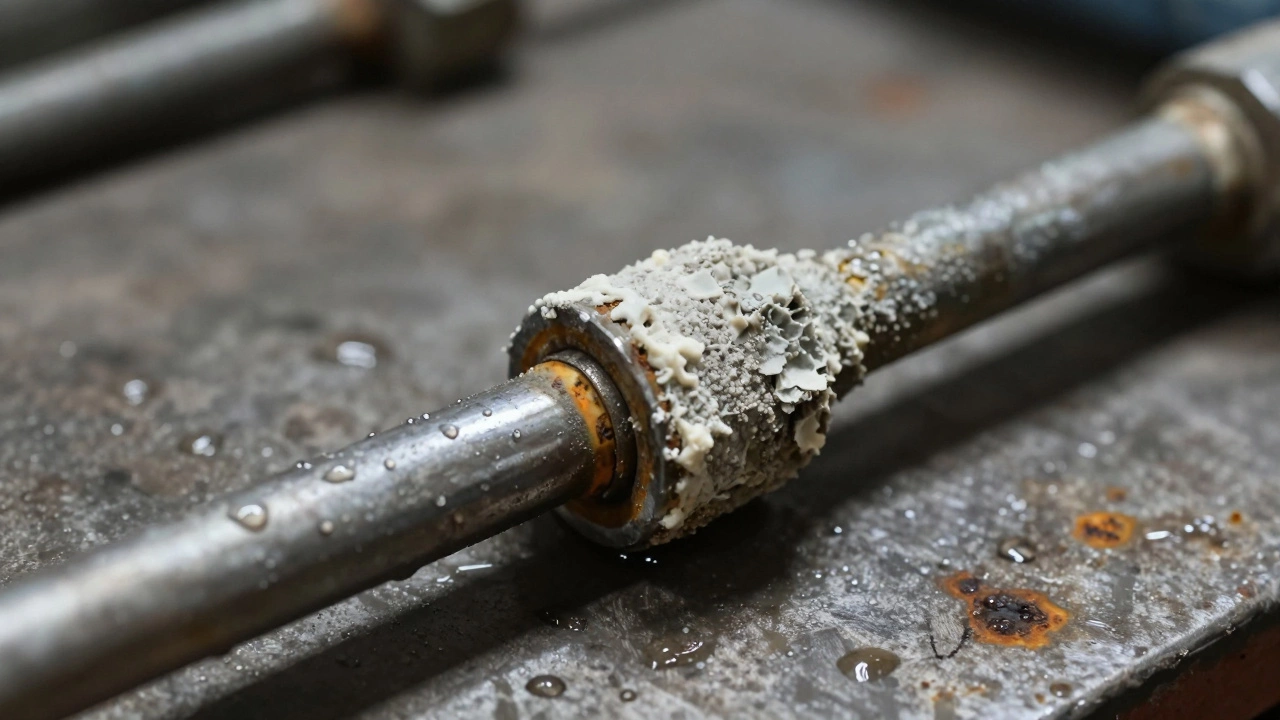
- Inspect it. If it’s thinner than a pencil, covered in hard mineral crust, or you can see the steel core, it’s done.
- If it’s still thick and mostly intact, you’re good for another year or two.
Pro tip: Wear gloves and eye protection. The rod can be covered in slime or sharp edges. If you can’t reach it easily, consider hiring a pro-it’s better than risking a flooded basement.
What to replace it with
Not all anode rods are the same. The three common types:
- Magnesium: Best for soft water. Most common in new heaters. Corrodes faster but is more effective at protecting the tank.
- Aluminum: Better for hard water. Less expensive, but can contribute to that rotten egg smell in some cases.
- Zinc: A mix of aluminum and zinc. Designed specifically to fight sulfur smells. Good if you’ve had odor problems before.
In Hamilton, where water is hard and odor is common, many professionals recommend zinc-aluminum rods. They last longer and reduce sulfur smells. You can buy them at hardware stores like Home Depot or Rona for $40-$70. Installation takes about an hour if you’re handy.
What happens if you ignore it
Ignoring a bad anode rod doesn’t mean your water heater will last longer. It means your tank will rust from the inside, and eventually, it will fail. A corroded tank can burst, flood your basement, and cause thousands in water damage. Replacing a water heater costs $1,200-$2,500. Replacing an anode rod costs $50-$100. That’s a 20-to-1 savings. And it’s not just money-it’s peace of mind. No more surprise leaks, no more smelly showers, no more panic when you hear popping sounds.
Prevention is cheaper than repair
Set a reminder on your phone: check your anode rod every 12 months. Mark it on your calendar the same day you check your smoke detectors. If you’ve got a water softener, check it every 18 months-softened water can accelerate rod wear. Keep a spare rod on hand. If you see signs of wear, replace it immediately. Don’t wait for the smell. Don’t wait for the rust. Don’t wait for the leak.
Your water heater doesn’t need to die young. With a simple annual check, you can stretch its life to 12, 15, even 20 years. That’s the real secret most plumbers won’t tell you.
How often should I replace my water heater anode rod?
Replace your anode rod every 3 to 5 years under normal conditions. In areas with hard water like Hamilton, check it every 1 to 2 years. If the rod is less than half its original thickness, or if you see heavy mineral buildup or exposed steel, replace it immediately.
Can a bad anode rod cause my water heater to leak?
Not directly. The anode rod itself doesn’t leak. But when it’s gone, the tank starts to corrode from the inside. Over time, that corrosion eats through the steel lining, causing leaks from the bottom of the tank. If your tank is leaking, the anode rod likely failed years ago.
Why does my hot water smell like rotten eggs?
The rotten egg smell comes from hydrogen sulfide gas produced by bacteria in the water. When the anode rod is worn out, these bacteria multiply unchecked. Magnesium rods can sometimes feed these bacteria, making the smell worse. Switching to a zinc-aluminum rod often fixes the odor.
Can I remove the anode rod completely to stop the smell?
Never remove the anode rod entirely. Without it, your water heater tank will corrode rapidly and may fail in less than a year. Instead of removing it, replace it with a zinc-aluminum rod, which reduces sulfur odor while still protecting the tank.
Is it worth replacing the anode rod if my water heater is old?
Yes-if your tank is under 8 years old and shows no signs of external rust or leaks, replacing the anode rod can extend its life by 5-10 years. If your tank is over 10 years old and already has rust spots or leaks, it’s better to replace the whole unit.