Water Heater Cold Water Diagnostic Tool
Gas
Has a vent pipe going up through the roof and a gas line at the bottom.
Electric
Has two thick copper wires entering the top of the tank.
No Heat at All
Water is completely cold from every tap.
Lukewarm Only
Some hot water initially, but it cools down quickly.
Intermittent Cold
Cold water appears randomly or in specific spots.
There is nothing quite like stepping into the shower and getting hit with a blast of ice-cold water. You check the dial, turn it up, and wait. Minutes pass. Still cold. This is one of the most common household frustrations, but the good news is that in about 80% of cases, you can fix it yourself without calling a technician. Whether you have a gas water heater or an electric water heater, the troubleshooting steps are surprisingly similar. The goal here is to help you identify the root cause quickly and apply the right fix so you can get back to warm showers by tonight.
Quick Summary / Key Takeaways
- Cold water usually stems from three main issues: tripped breakers/blown fuses, a faulty thermostat, or sediment buildup.
- Always kill the power (for electric) or shut off the gas valve (for gas) before opening any panels.
- If the pilot light is out on a gas unit, relighting it often solves the problem immediately.
- Sediment at the bottom of the tank blocks heat transfer; flushing the tank every 1-2 years prevents this.
- If no hot water comes out at all after checking basics, the heating element or burner assembly likely needs replacement.
Diagnose the Problem: Gas vs. Electric
Before touching anything, figure out which type of water heater you have. Look at the utility bills or the side of the tank. If you see a natural gas line connected to the bottom and a vent pipe going up through the roof, it’s gas. If you see two thick copper wires entering the top of the tank, it’s electric. This distinction matters because the "brain" of the system works differently for each.
For gas water heaters, the primary culprit for sudden cold water is usually the pilot light or the thermocouple. If the flame went out due to a draft or vibration, the gas supply cuts off automatically for safety. For electric water heaters, the issue is almost always electrical: a tripped circuit breaker, a blown fuse, or a failed heating element.
Step 1: Check the Power Supply
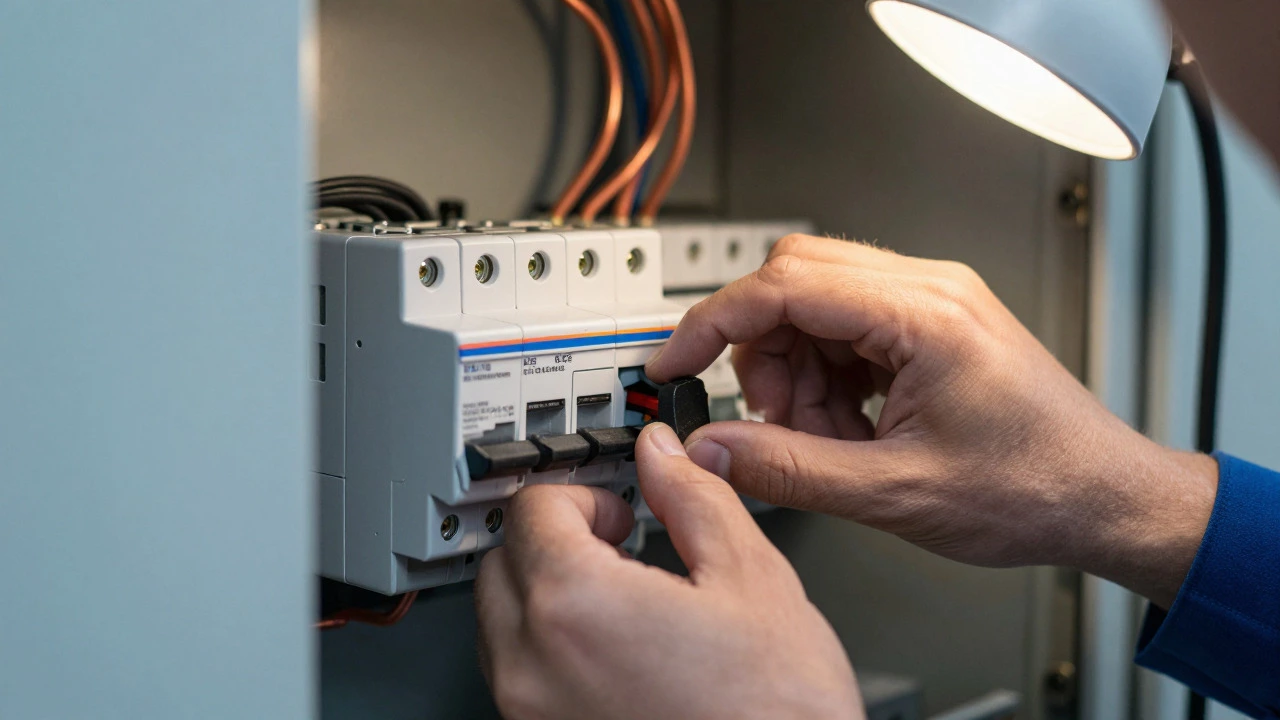
If your water heater is electric, start at the main electrical panel. Open the door and look for a breaker labeled "Water Heater." It might be a single large breaker or a double-pole breaker. If it’s flipped to the middle or off position, flip it back on. Wait ten minutes. If it trips again immediately, do not force it-this indicates a short circuit or a failed element drawing too much current. Call a professional then.
If the breaker is fine, check the disconnect switch near the water heater itself. Some units have a pull-chain or a toggle switch right on the tank. Make sure it’s in the "On" position. This step sounds obvious, but it catches more people than you’d think.
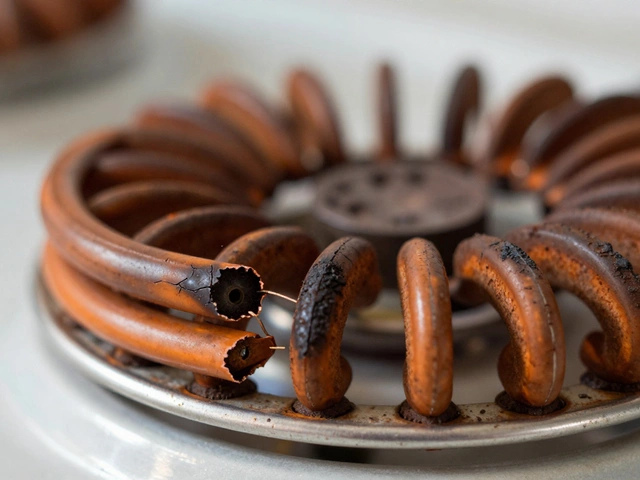
Step 2: Relight the Pilot Light (Gas Units)
If you have a gas water heater, crouch down and look into the viewing window near the bottom of the tank. Do you see a small blue flame? If not, the pilot is out. Here is how to relight it safely:
- Turn the control knob to "Pilot" and press it in.
- Hold a long lighter or match to the pilot tube opening.
- Press the reset button if there is one, then hold the knob down for 30 seconds after the flame ignites.
- Release the knob slowly. If the flame stays lit, turn the knob to "Auto" or "On."
If the flame keeps going out within seconds, your thermocouple might be dirty or misaligned. A gentle tap on the thermocouple rod (the metal probe next to the pilot) can sometimes realign it. If that doesn’t work, the part may need cleaning or replacement.
Step 3: Inspect the Heating Elements (Electric Units)
If the breaker is on but the water is still lukewarm or cold, the heating elements inside the tank are likely the problem. Most electric tanks have two elements: one at the top and one at the bottom. If the top element fails, you’ll get some hot water initially, but it will cool down as you use it. If the bottom element fails, the tank won’t reach full temperature.
To test them, you need a multimeter. Kill the power first. Remove the access panel on the side of the tank. You’ll see a circular cover with two nuts holding the element in place. Unscrew the nuts carefully (have a towel ready for drips). Disconnect the wires and set your multimeter to resistance (ohms). Place the probes on the two terminals of the element. If you read infinite resistance (OL), the element is dead and needs replacing. If you read a low number (usually between 10 and 30 ohms), it’s good.
Step 4: Flush Sediment Buildup
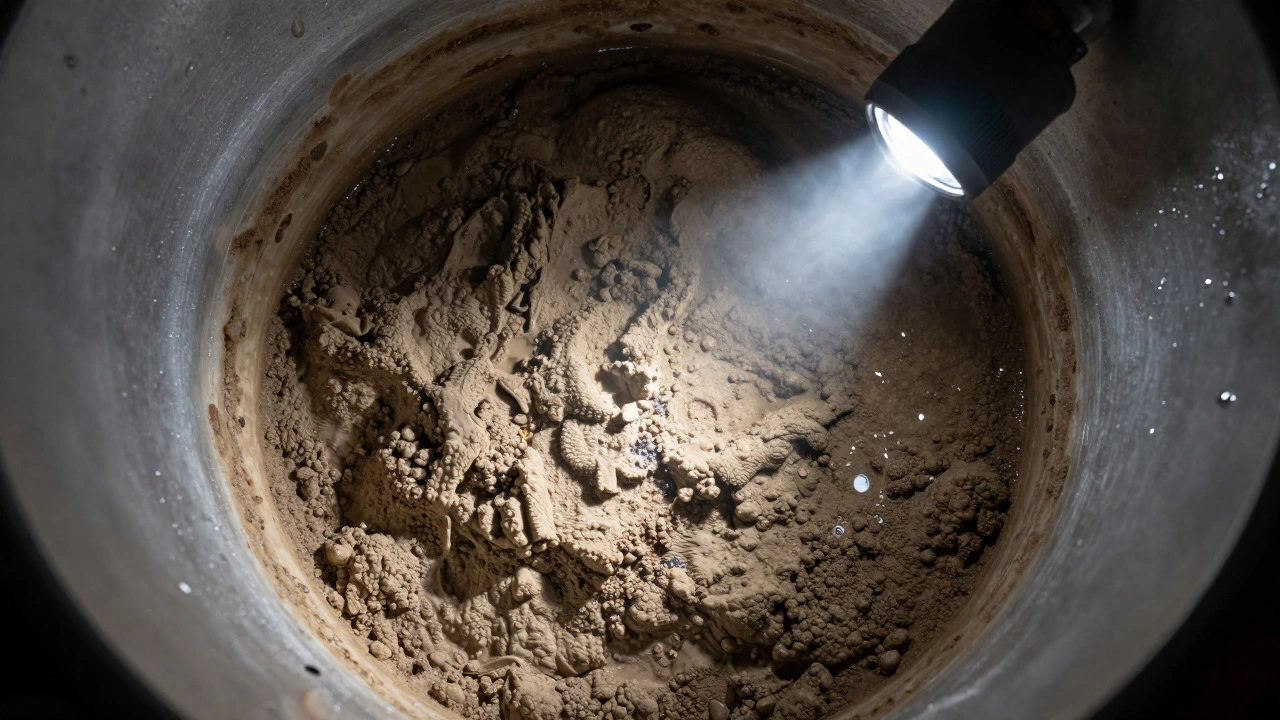
This is the most overlooked maintenance task. Over time, minerals from hard water settle at the bottom of the tank. This layer of sludge acts as insulation, preventing the heating element or burner from transferring heat efficiently to the water above it. In severe cases, it can cause the element to overheat and burn out prematurely.
To flush the tank:
- Shut off the water supply valve at the top of the tank.
- Open a hot water faucet somewhere in the house to relieve pressure.
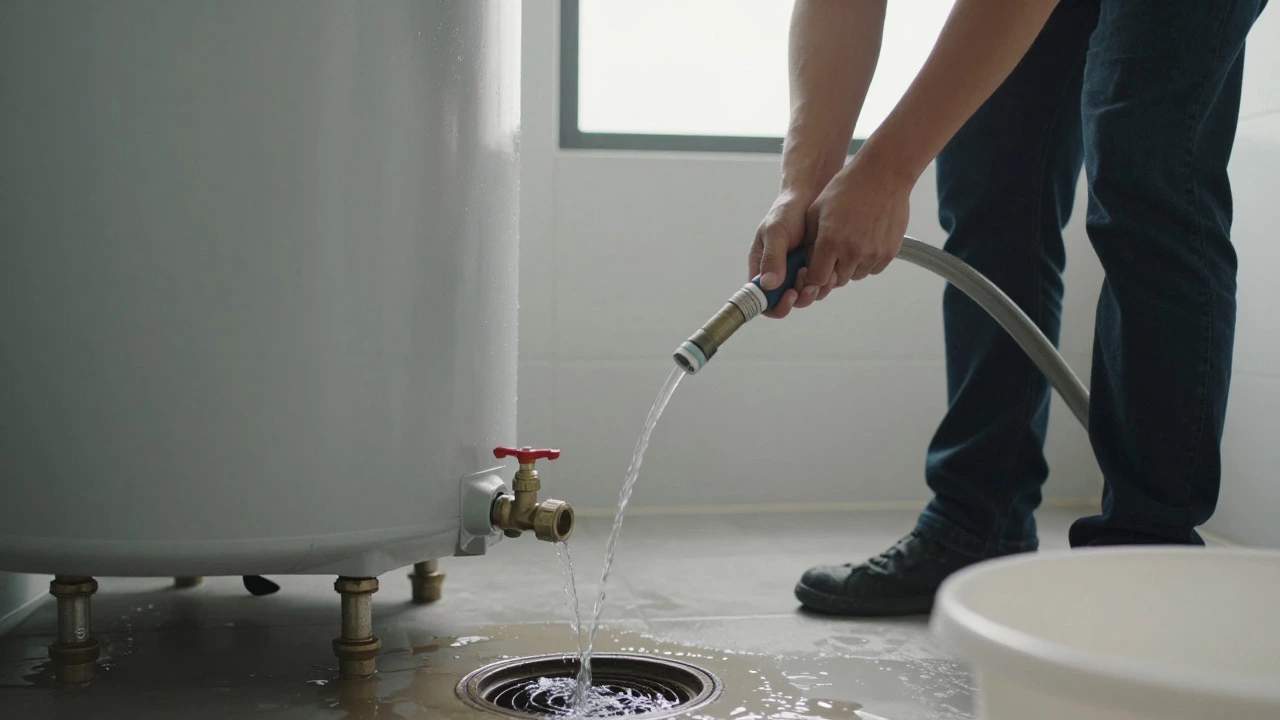
- Connect a garden hose to the drain valve at the bottom of the tank.
- Run the hose into a floor drain or outside.
- Open the drain valve. Let the water run until it clears from cloudy/brown to clear.
- Close the valve, remove the hose, and refill the tank by turning the water supply back on.
Do this once a year if you live in an area with hard water. In Hamilton, Canada, where water hardness varies by neighborhood, annual flushing is a smart habit.
Step 5: Adjust the Thermostat
Sometimes the system is working perfectly, but the temperature setting is just too low. The standard recommendation is 120°F (49°C) to prevent scalding while saving energy. However, if you feel the water is "cold" when it should be warm, try raising the thermostat by 10 degrees. Wait 24 hours to see if the perceived temperature improves. On gas units, the thermostat is a dial on the front. On electric units, it’s behind the access panel near each heating element.
Comparison: Common Causes and Fixes
| Issue | Gas Water Heater | Electric Water Heater | Difficulty Level |
|---|---|---|---|
| No Heat at All | Pilot out or gas valve closed | Breaker tripped or element failed | Easy |
| Lukewarm Water Only | Sediment buildup or low thermostat | One element failed or sediment | Medium |
| Intermittent Cold | Drafty pilot or faulty thermocouple | Thermostat cycling issue | Medium-Hard |
| Banging Noises + Cold | Heavy sediment scale | Heavy sediment scale | Hard (Flush required) |
When to Call a Professional
You don’t need to fix everything yourself. Call a licensed plumber if you notice any of these signs:
- The breaker trips repeatedly even after testing the element.
- You smell gas (shut off the valve and leave the house).
- There is visible rust on the tank or leaks around the connections.
- The water smells like eggs (sulfur bacteria in the tank).
- The water heater is older than 10-12 years and has had multiple failures.
In these cases, repair costs can approach the price of a new unit. A new high-efficiency model can save you money on energy bills in the long run, especially if you’re replacing an old standard-efficiency tank.
Frequently Asked Questions
Why does my water heater only give cold water in the morning?
This often happens if the thermostat is set too low or if sediment has built up, insulating the heating source. It could also mean the upper heating element in an electric unit is failing. Try raising the temperature slightly and schedule a flush if the problem persists.
How long should I wait after fixing the water heater before using hot water?
For electric units, wait about 4-6 hours for the tank to fully reheat after a major repair or flush. For gas units, it takes less time, usually 30-60 minutes, depending on the recovery rate of the burner. Run a cold tap first to purge any air in the lines.
Is it safe to flush a water heater myself?
Yes, it is generally safe if you follow the steps carefully. Just make sure the tank is cool before draining to avoid burns. Use a sturdy hose and secure it to the drain valve. If the tank is very old and rusty, there is a small risk of corrosion particles coming loose, so monitor the water quality during the refill.
What is the lifespan of a typical water heater?
Most storage tank water heaters last between 8 and 12 years. Tankless models can last 20 years or more. If your unit is approaching the 10-year mark and starting to fail, consider budgeting for a replacement rather than repeated repairs.
Can hard water damage a water heater?
Yes. Hard water causes mineral deposits (scale) to build up inside the tank. This reduces efficiency, increases energy costs, and can lead to premature failure of heating elements or burners. Installing a water softener or flushing the tank annually helps mitigate this damage.